
Award-winning reference photos
Identity
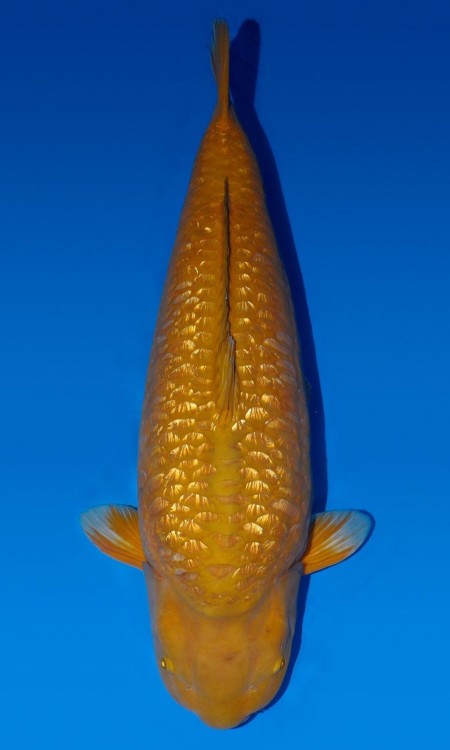
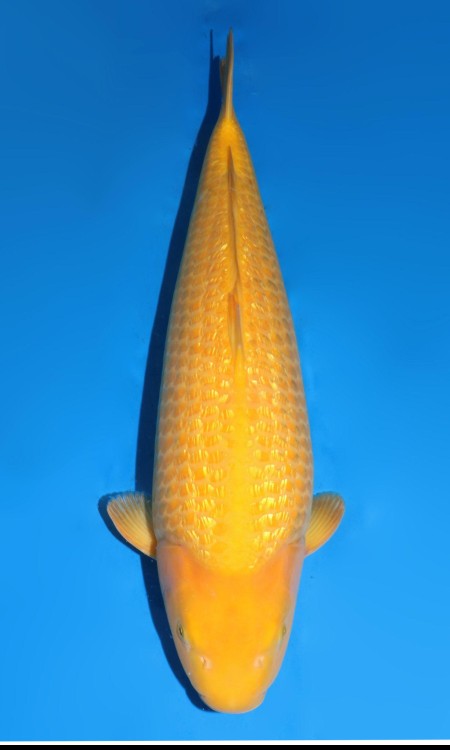
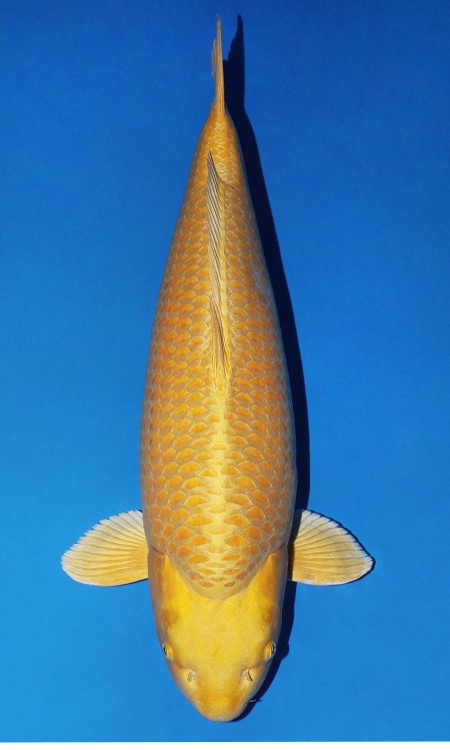
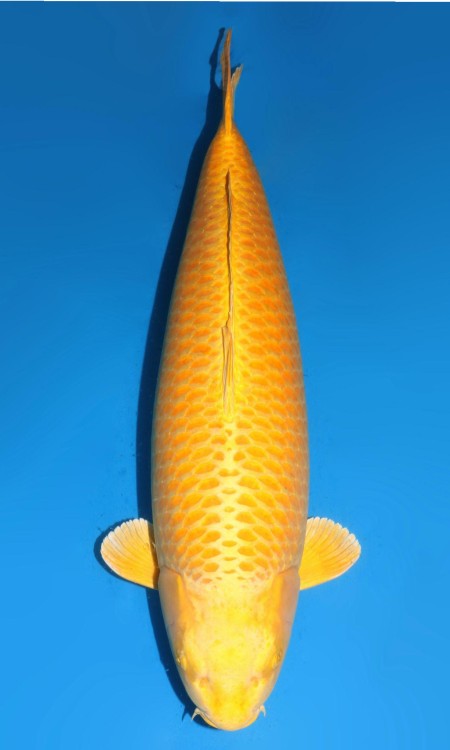
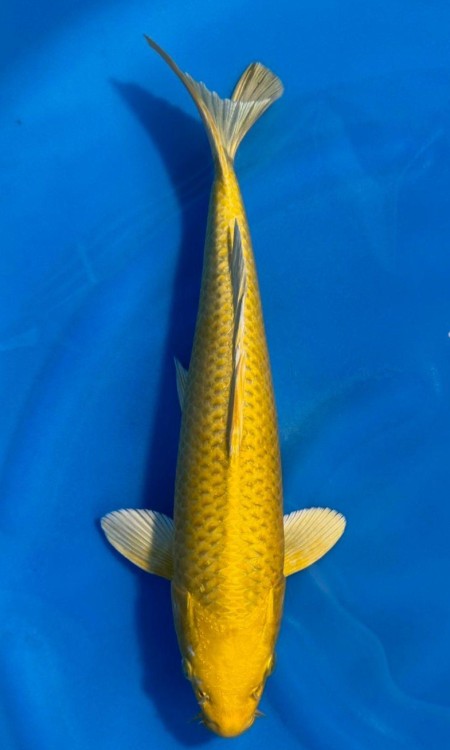
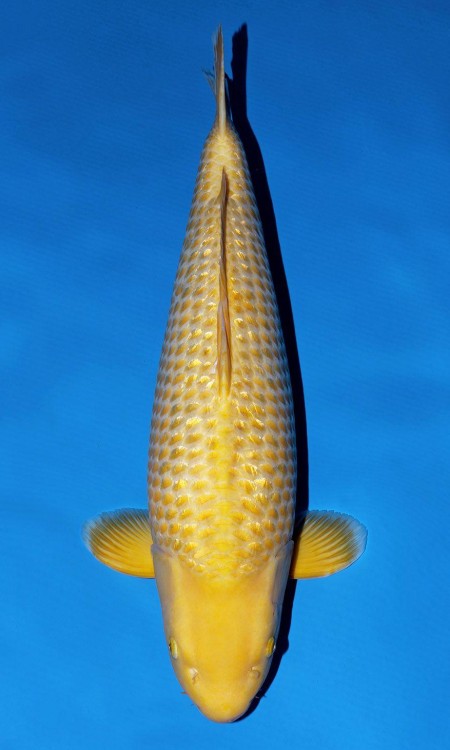
Ogon are appreciated for metallic luster and clean simplicity. Because there is no complex pattern to distract the eye, body shape, even color, and shine are especially important.
| Feature | Ogon standard | Common issue |
|---|---|---|
| Metallic luster | Even shine from head through tail, including fins. | Dull head or uneven sheen that breaks the metallic impression. |
| Color | Clean, consistent single color: platinum, yamabuki yellow, orange, or related Ogon tones. | Patchy color or stains that look accidental rather than variety-related. |
| Body | Strong body is critical because there is no pattern to hide weakness. | Buying a bright color on a thin or bent frame. |
| Pond visibility | Ogon are easy to see in greenish or deep ponds. | Overstocking because hardy-looking single-color koi seem simple. |
Core terms
- Hikari
- Metallic shine or luster. On Ogon, weak shine is easy to see because the body is one color.
- Hikari-muji
- The single-color metallic group. Yamabuki Ogon is the yellow-gold example many pond keepers recognize quickly.
- Even color
- Patchy color or dull areas weaken the impression because there is no pattern to hide them.
Where Hikari-muji fits
Metallic koi are easier to separate when you look beyond shine. JNPA uses the body ground, large color markings, and utsuri-zumi to distinguish three major Hikari groups.
| Group | Identification rule | Examples |
|---|---|---|
| Hikari-muji | No large color imprints; the whole body has metallic luster. Scale-level Matsuba centers can still be present. | Yamabuki Ogon, Platinum Ogon, Kin Matsuba |
| Hikari-moyo | Non-black ground, visible color markings, and whole-body metallic luster. | Hariwake, Sakura Ogon, Kikusui |
| Hikari-utsuri | Black ground, visible markings, whole-body metallic luster, and Utsuri-style sumi. | Kin Showa, Gin Shiro Utsuri, Kin Ki Utsuri |
Matsuba is the important exception: the dark center of each scale forms a repeated pinecone texture, not a large body-color imprint. That scale-level texture does not automatically move Kin Matsuba or Gin Matsuba into Hikari-moyo. ZNA likewise treats Matsuba markings as scale texture rather than an ordinary pattern in its Muji show grouping.
Four net-like patterns that are not the same
Several koi can look “netted” in photographs, but the location and material of the dark detail are different. Check where the dark color sits before naming the variety.
| Appearance | Where the dark detail sits | Decisive extra clue |
|---|---|---|
| Matsuba | Dark pigment is centered within individual scales, repeating as a pinecone texture. | Aka and Ki Matsuba are non-metallic Muji; Kin and Gin Matsuba add whole-body metallic luster. |
| Asagi | A blue ground and orderly scale mesh extend across the body. | Look for a clean head and balanced red on the belly, fins, and cheeks. |
| Kujaku | An Asagi-like mesh appears beneath red markings. | The whole body must also show metallic luster. |
| Kage | Pale, mesh-like sumi appears inside an existing red, white, or yellow pattern field. | It is an overlay within the pattern, not a dark center on every scale. |
This distinction helps prevent strong lighting from turning ordinary scale reflection into “metallic,” or any repeated dark texture into Matsuba.
Named Hikari-muji varieties
Hikari-muji includes more than the familiar yellow-gold Ogon. These names describe the base color, scale treatment, or distinctive head marking.
| Variety | Identification point |
|---|---|
| Yamabuki Ogon | Bright yellow-gold metallic body without large color markings. |
| Platinum Ogon | White to light-gray metallic body without large color markings. |
| Nezu Ogon | Uniform silver-gray metallic body. |
| Orange Ogon | Reddish-yellow or orange metallic body without large color markings. |
| Mukashi Ogon | Turmeric to dark-gold metallic ground, with black appearing on parts of the scales, fins, and head. |
| Kin Matsuba | Gold or turmeric metallic ground with a dark pinecone-like matsuba pattern across the back. |
| Gin Matsuba | Silvery-white metallic ground with a matsuba pattern across the back. |
| Doitsu Gin Matsuba | The reduced-scale Doitsu form of Gin Matsuba, with exposed skin and the same silver Matsuba character. |
| Aka Matsuba Ogon | Red or vermilion metallic ground with a matsuba pattern across the back. |
| Mizuho Ogon | A Doitsu red-orange metallic form with exposed skin and some black-shining scales; also called Doitsu Aka Matsuba Ogon. |
| Kin Kabuto | Gold-brown metallic body with paired gold head markings that resemble the crest of a Japanese helmet. |
| Gin Kabuto | Silver metallic body with paired silver helmet-crest markings on the head. |
Beginner notes
- Look for strong, even metallic sheen from head through tail.
- Color should look consistent, not patchy or dull.
- A good Ogon can be very visible and satisfying in a garden pond.
- Because Ogon are visually simple, do not compromise on body line and swimming behavior.
Reference
Classification and identification points follow the All Japan Nishikigoi Promotion Association's Hikari-muji guide, its references for Asagi, Kujaku, and Kage varieties, plus the Zen Nippon Airinkai Muji classification note. Photo sources are listed with each image.