
Start with purpose
A koi pond and a decorative water garden are not the same project. Koi produce heavy waste, grow large, and need oxygen-rich water. Beautiful edges and waterfalls help the eye; drains, filters, aeration, and access keep the fish alive.
For planning, treat the pond as a life-support system first and a landscape feature second. Many koi references emphasize the same order: adult fish load, water volume, solids removal, biological filtration, oxygen, and only then rocks, plants, waterfalls, and viewing style.
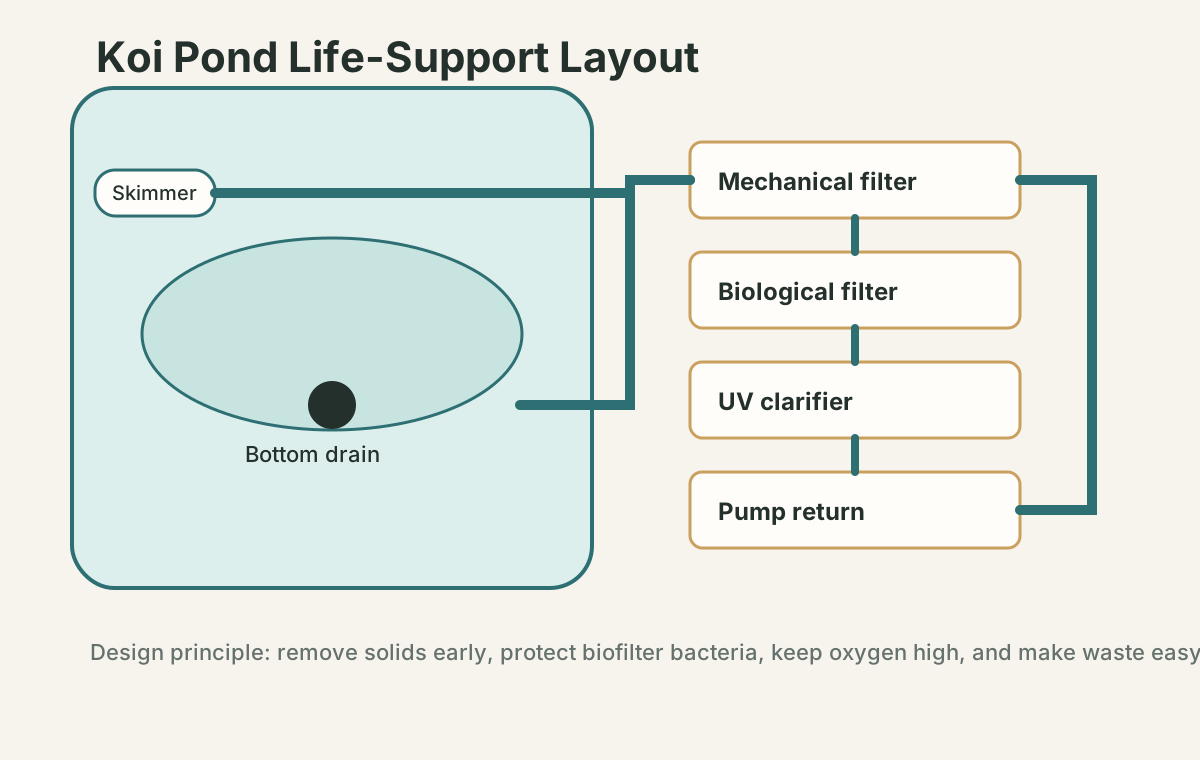
| Planning question | Professional-style answer | Risk if skipped |
|---|---|---|
| How many adult koi? | Size pond and filtration around adult fish, not small juveniles. | Overcrowding after the first growth season. |
| Where does solid waste go? | Bottom drain and skimmer to mechanical filtration before biofilter. | Sludge, ulcers, parasites, and high ammonia load. |
| How is oxygen supplied? | Air pump/diffusers plus water movement; extra capacity for heat and medication. | Gasping, poor biofilter function, sudden losses. |
| Can everything be cleaned? | Valves, drains, filter access, netting room, safe electrical access. | Maintenance becomes difficult and gets skipped. |
Core design targets
| Design area | Useful target | Notes |
|---|---|---|
| Depth | Often 3-4 ft or deeper for koi-focused outdoor ponds, depending on climate and local code. | Depth helps temperature stability and predator protection, but safety, access, and construction quality matter. |
| Circulation | Set a required flow for the actual pond, fish load, feeding, filter, and pipe layout; then verify delivered flow. | A pump’s maximum-flow label does not show the flow it will deliver against the installed system’s head. |
| Solids removal | Bottom drain plus skimmer feeding mechanical filtration before biological media. | Removing waste before it dissolves reduces ammonia load and sludge problems. |
| Biofiltration | Use oxygen-rich media with steady flow; protect mature media from chlorine and over-cleaning. | The bacteria that process ammonia and nitrite need oxygen and stable surfaces. |
| Aeration | Dedicated air pump/diffusers plus waterfall or return movement. | Oxygen demand rises in warm water, after feeding, during algae die-off, and during many treatments. |
Measure volume before sizing equipment
Do not size filtration, circulation, or water treatment from a visual guess. For a rectangular pond, estimate volume from length × width × average water depth; for a circular pond, use π × radius2 × average depth. When the bottom is irregular, take depth readings in several areas rather than relying on the deepest point. Convert cubic feet to US gallons by multiplying by 7.48, and keep the result with the pond records.
Shape-based volume is still an estimate. If the pond can be safely filled through a water meter before fish are introduced, record the metered fill as the working volume and note any later changes such as a lowered operating level.
Choose a pump at the system's total head
A pump's advertised maximum flow is normally measured with little or no resistance. Installed flow is lower because the pump must overcome vertical lift and friction through pipe, elbows, valves, filters, and outlets. First decide the flow the system needs, then add vertical and friction head and read the manufacturer's pump curve at that operating point.
- List the intended flow through each return, waterfall, shower, or other outlet.
- Measure vertical lift from the lowest operating water level to the discharge point.
- Account for pipe length, inside diameter, fittings, valves, and filter resistance.
- Select a pump that provides the required flow at that total head, not merely at zero head.
- After installation, verify accessible outlets with a known-volume container and stopwatch, then compare the result with the design target.
These pump-selection principles come from UF/IFAS aquaculture engineering guidance. They apply to water-distribution systems generally; final koi-pond flow also depends on stocking, feeding, filter limits, and layout. See An Introduction to Sizing Centrifugal Pumps in Aquaculture.
Separate beauty from life support
Rocks, waterfalls, and plants can look good, but the life-support system is filtration, circulation, oxygen, and water-change access. Design those first.
Professional Video
Watch: questions before building
This Sacramento Koi planning video is useful before excavation because it frames a pond around volume, filtration, maintenance access, and long-term fish load instead of only the visible landscape.
Plan maintenance access
A pond that is easy to inspect and clean is more likely to stay healthy. Design the service route before landscaping closes around the equipment.
Make routine cleaning practical
- Leave safe working space around pumps, valves, strainers, UV units, mechanical filters, bottom-drain lines, and skimmers.
- Provide isolation valves or unions where equipment may need removal, plus a controlled route for dirty backwash and flush water that follows local rules.
- Make sediment traps, sumps, and mechanical filters visible and reachable so collected solids can be removed before they break down.
- Keep the manufacturer's cleaning intervals beside the system, and log the date, observations, water tests, and any change in flow after service.
Cleaning frequency must follow the installed equipment, fish and feeding load, season, and observed solids accumulation. General recirculating-system guidance identifies sediment, biofilm, sumps, and filter beds as places where organic matter and microorganisms concentrate; this supports designing access for inspection and routine solids removal, not imposing one universal koi-pond schedule.
Prepare for power, pump, and air failures
Power outages and single-equipment failures can stop both circulation and oxygen delivery. Write the response before an emergency, keep it where another caretaker can find it, and design enough redundancy that one failed pump, air line, breaker, or power source does not remove every route for aeration.
Backup aeration checklist
- Identify the equipment that supplies oxygen and the equipment that keeps water moving through the biological filter.
- Provide an emergency aeration method with a power source independent of the normal system, sized for the actual pond and fish load.
- Test the backup under realistic load and record how to start it, where its cables or fuel are kept, and which circuits it can safely support.
- During an outage, start emergency aeration promptly, watch fish behavior, and pause feeding while normal circulation or aeration is impaired.
- When power returns, confirm air, returns, pumps, and filters are actually operating; check water quality and record the outage duration and response.
Surface gulping, a sudden loss of feeding response, and unusual clustering near moving water can indicate oxygen stress, but visual signs appear late. A dissolved-oxygen meter can improve decisions if it is maintained and the caretaker knows how to use it.
There is no safe universal outage time for every koi pond. Water temperature, fish biomass, feeding, algae and plant respiration, organic load, and the design of the pond and filter all change oxygen demand. These recommendations adapt general aquaculture and pond guidance; they are not a koi-specific guarantee. See UF/IFAS guidance on recirculating-system emergency protocols, emergency and maintenance aeration, and recognizing oxygen depletion.
Starting a new pond: prove the filter is ready
Clear water does not show whether a new biological filter can process fish waste. Nitrifying microbes need time to establish; temperature, oxygen, feeding load, and filter capacity affect that process. Keep a record of ammonia, nitrite, pH, temperature, and alkalinity as the system develops, and increase fish and feeding loads gradually as monitoring supports it.
Check the source water before filling or topping up. Municipal supplies may contain chlorine or chloramine; well water can have different gas and mineral problems. Choose water preparation for the actual supply rather than assuming all clear tap or well water is ready for fish.
A maintenance record that helps you spot changes
Record fish behavior, feeding, test results, filter cleaning, water replacement, and equipment interruptions together. If water quality changes, the sequence can help you identify whether increased feeding, reduced circulation, accumulated solids, or a recent maintenance event contributed.
- Check that returns and aeration are operating; compare their output with the pond's usual performance.
- Remove collected solids before they break down, using the cleaning instructions for the installed filter.
- Recheck water quality after changes to stocking, feeding, or filtration instead of relying only on water appearance.
These principles draw on UF/IFAS guidance for recirculating aquaculture systems; they are not universal koi stocking limits or a fixed filter-startup timetable. Read the system design and water-quality guidance and maintenance and problem-solving guidance.
References used for this guide
- Barry James, A Fishkeeper's Guide to Koi - pond construction, filters, pumps, and aeration topics.
- Dennis Kelsey-Wood and Tom Barthel, Garden Ponds: Basic Pond Setup and Maintenance - pond water chemistry and garden pond setup context.
- George C. Blasiola, Koi: Everything About Care, Nutrition, Diseases, Pond Design and Maintenance - pond design, maintenance, and aquatic plant context.
- William G. Coleman and Ken Rust, Water Clarity Secrets for Ponds and Water Gardens - water clarity and filtration maintenance context.
- Penn State Extension, Pond Measurements: Area, Volume and Residence Time - measured area, multiple depth readings, average depth, and volume estimation.
- UF/IFAS Extension, An Introduction to Sizing Centrifugal Pumps in Aquaculture - pump curves, required flow, total head, friction losses, and field flow checks.
- UF/IFAS Extension, Fish Health Management Considerations in Recirculating Aquaculture Systems, Part 2 - sediment, biofilm, sumps, filter beds, and routine solids removal.
- UF/IFAS Extension, Fish Health Management Considerations in Recirculating Aquaculture Systems, Part 3 - maintenance records, cleaning protocols, and redundancy for power, pump, and air failures.
- UF/IFAS Extension, The Role of Aeration in Pond Management - emergency versus maintenance aeration and localized oxygen refuges.
- UF/IFAS Extension, Dissolved Oxygen for Fish Production - oxygen-depletion causes, warning signs, monitoring, and emergency aeration.