
Major groups to learn next
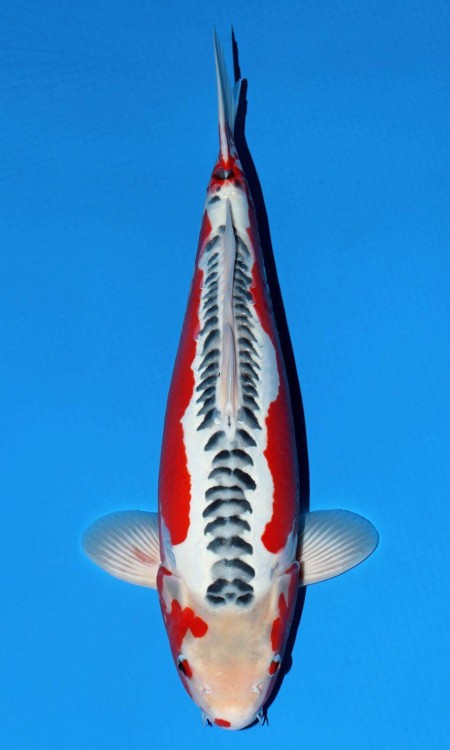
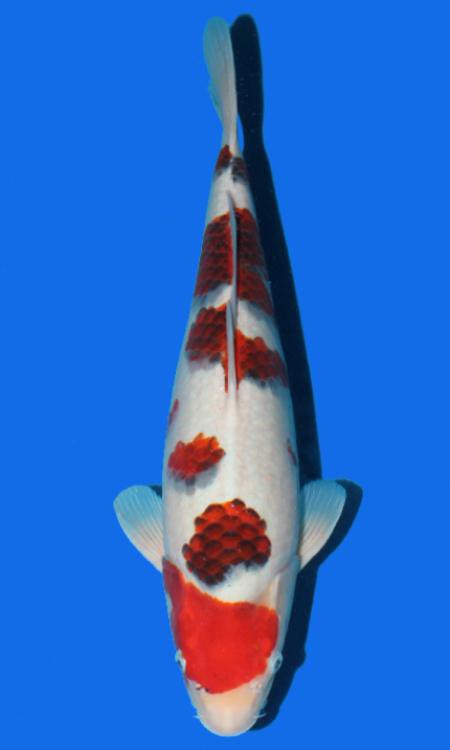
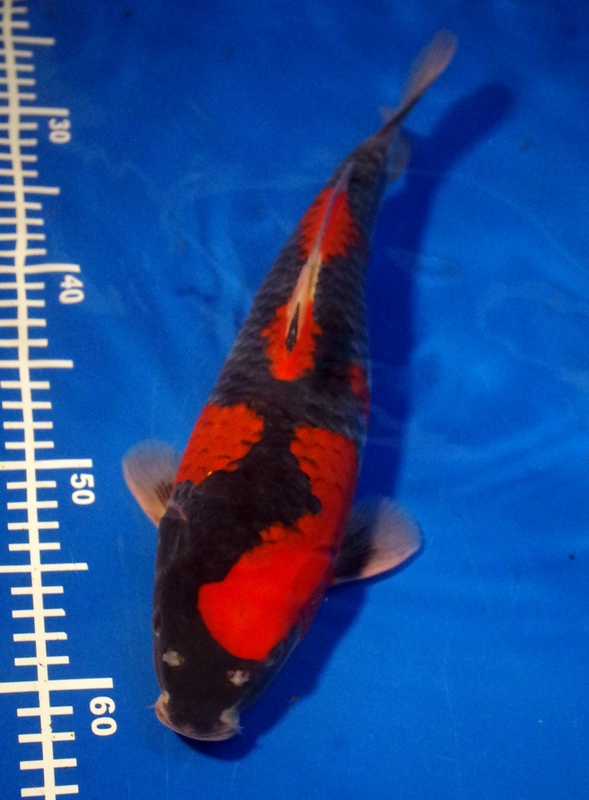
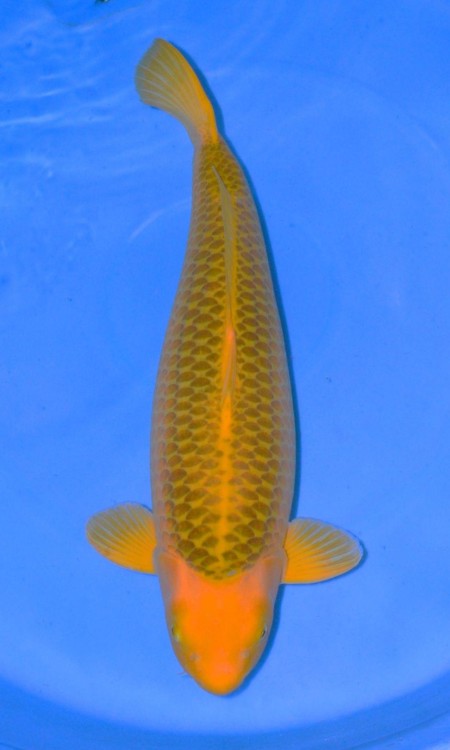
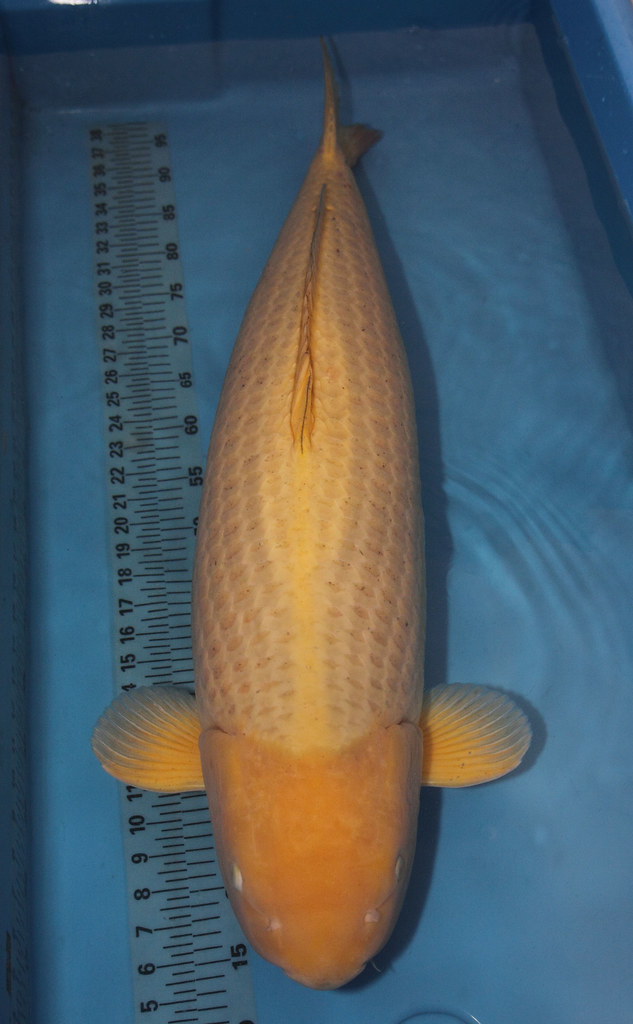
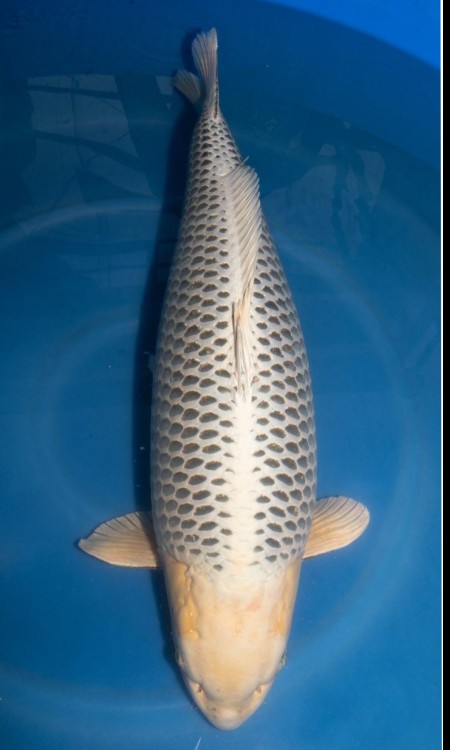
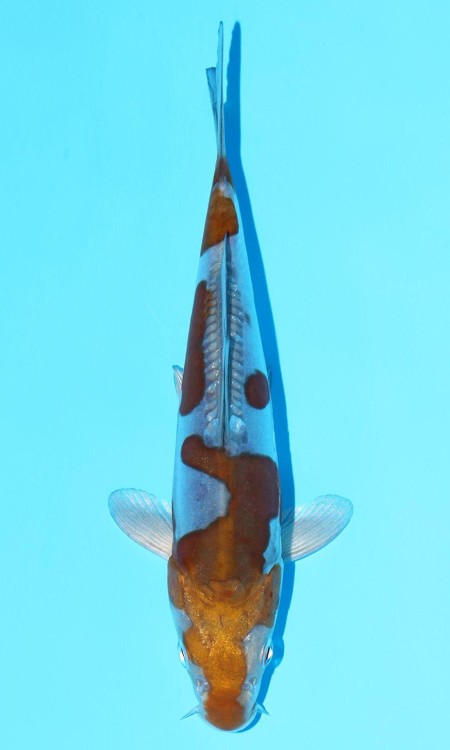
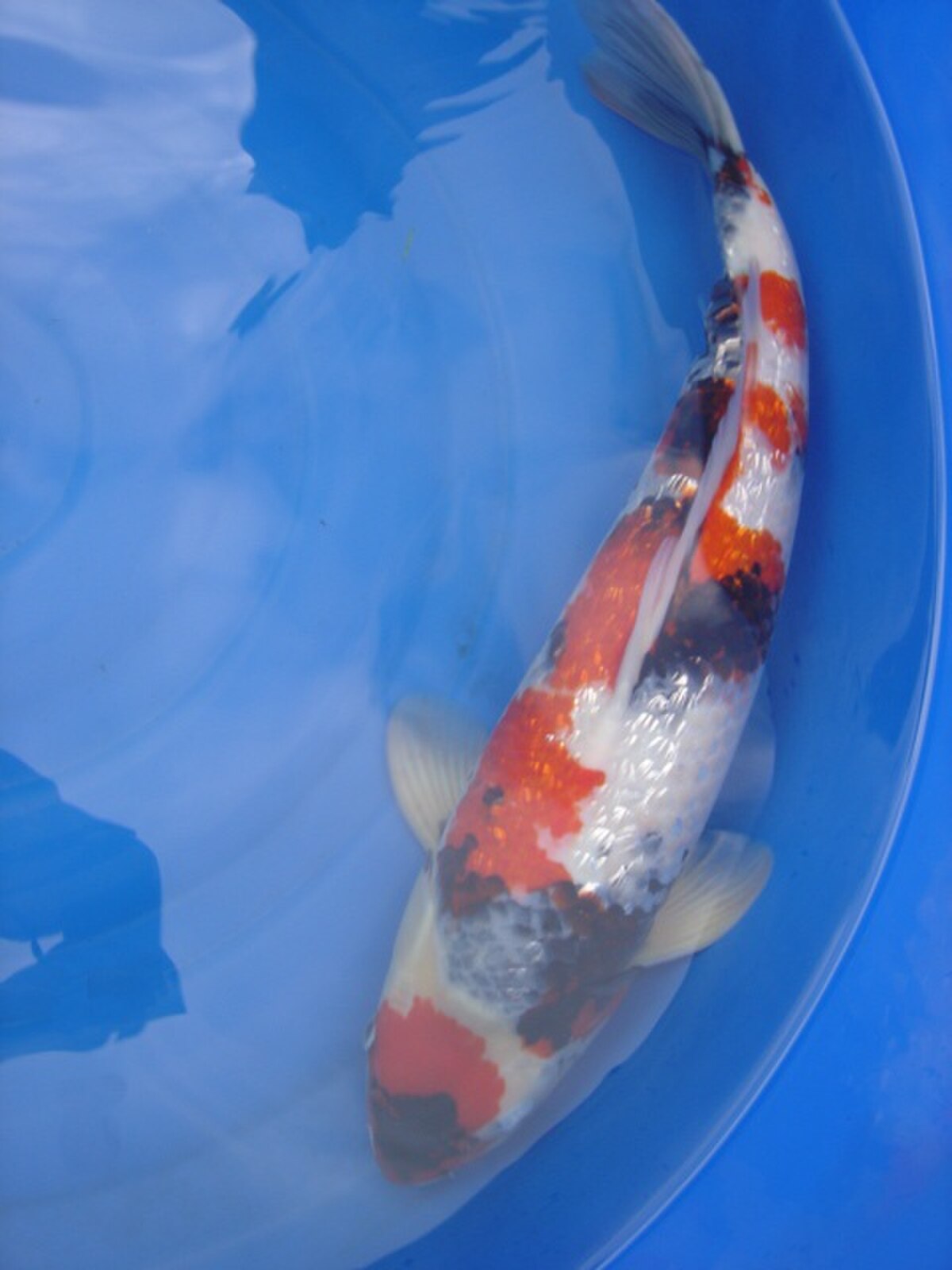
Use the whole-fish photographs to compare body ground, pattern placement, scale structure, and luster. Each card opens a fuller guide with identification and quality notes.
| Group | Identification cue | Quality cue |
|---|---|---|
| Shusui | Doitsu Asagi relative with mirror scales along the back. | Neat dorsal scale line, clean head, controlled red on sides. |
| Goromo / Koromo | Kohaku-like red pattern with blue or dark edging over the red. | Clean white ground and reticulation that enhances rather than dirties the beni. |
| Goshiki | Five-color impression, often red pattern over darker reticulated ground. | Clear red pattern, balanced dark ground, no muddy confusion. |
| Kujaku | Metallic koi with reticulation and orange or red pattern. | Strong metallic sheen plus orderly reticulation. |
| Chagoi | Brown or tea-colored, generally without a complex pattern. | Strong body, even color, clean scales, and healthy skin. |
| Soragoi | Even gray-blue body with visible scale structure. | Uniform color, orderly scales, and balanced conformation. |
| Ochiba Shigure | Brown autumn-leaf pattern over a gray or blue-gray ground. | Readable pattern, clean reticulation, and balanced body. |
| Gin Rin | Gold or silver reflection from individual scales across many base varieties. | Even, well-distributed sparkle that does not hide the base pattern. |
| Doitsu | Few regular scales, often with larger mirror scales along the back or sides. | Clean skin and deliberate, orderly scale placement. |
Whole-fish reference gallery
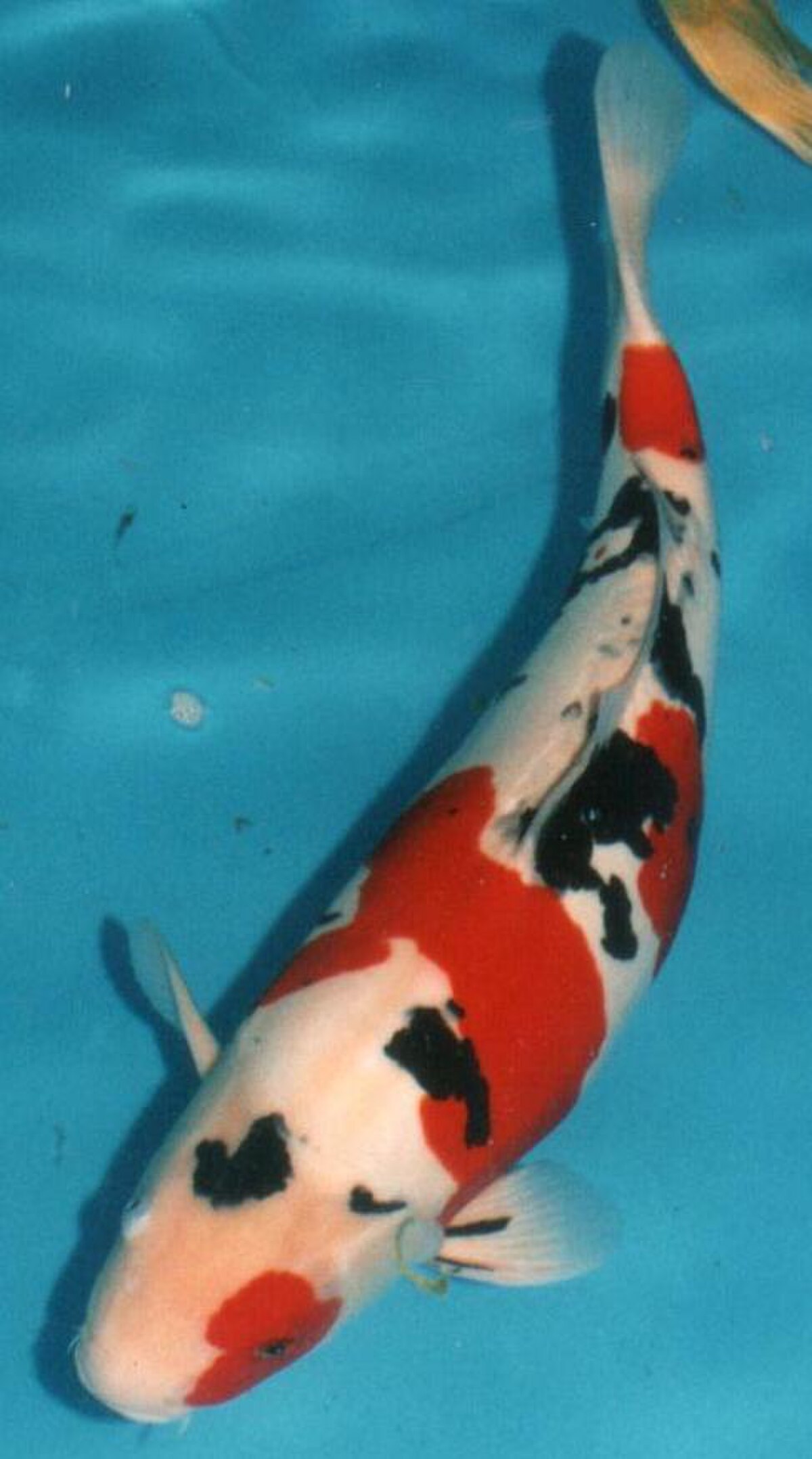
Kawarimono family map
Zen Nippon Airinkai organizes Kawarimono into practical families. This helps avoid treating every unusual koi as an unrelated “miscellaneous” fish.
| Family | Named varieties | What the grouping tells you |
|---|---|---|
| Karasugoi family | Karasugoi, Hajiro, Hageshiro, Yotsushiro, Matsukawabake, Kumonryu, Suminagashi | Black-based relatives that must be separated by white placement, scale type, and pattern character. |
| Matsuba family | Aka Matsuba, Ki Matsuba, Shiro Matsuba, Doitsu Matsuba | The dark scale centers form a pinecone-like effect over the ground color. |
| Kage Utsuri family | Kage Shiro Utsuri, Kage Hi Utsuri, Kage Ki Utsuri, Kage Showa | A thin, mesh-like sumi pattern lies over the white, red, or yellow markings. This is different from relying only on the heavier Utsuri-zumi pattern. |
| Kanoko | Kanoko Kohaku, Kanoko Sanke, Kanoko Showa, Kanoko Asagi, Kanoko Kin Showa | Red is localized to individual scales, producing a dotted pattern while the underlying variety remains recognizable. Kanoko Kin Showa also has whole-body metallic luster. |
| Single-color | Kigoi, Aka Muji, Aka Hajiro, Karashigoi, Chagoi, Soragoi | Body shape, skin quality, and even color matter more than a complex pattern. |
| Ochiba family | Ochiba Shigure, Koyo | Autumnal brown or yellow patterning distinguishes these fish from plain single-color koi. |
| Recent named combinations | Ginrin Koromo Showa; Ginrin Kanoko Karashi (“Golden Corn”) | These names combine an underlying color-pattern identity with a reflective Ginrin scale trait; they should not be read as simple single-color varieties. |
Kanoko, Kage, Gin Rin, or ordinary color?
These labels describe different visual structures. Check where the color or reflection sits before naming the fish.
| Feature | What to look for | Useful distinction |
|---|---|---|
| Kanoko | Red color is concentrated on individual scales, creating separated dots. | Unlike an ordinary hi plate, the red is not one continuous field. Kanoko Kohaku may also carry ordinary continuous red markings. |
| Kage | Thin, mesh-like sumi appears within the underlying white, red, or yellow markings. | Read the reticulated “shadow” together with the base Showa or Utsuri pattern, including its stronger Utsuri-zumi. |
| Gin Rin | Individual scales reflect gold or silver light. | The effect belongs to the scales and can vary with viewing angle and lighting. |
| Metallic / Hikari | Luster carries across the body rather than appearing only as isolated reflective scales. | Kanoko Kin Showa is both Kanoko-patterned and metallic; one label does not cancel the other. |
Other verified Kawarigoi names
- Goshiki Shigure
- Shows Asagi-style reticulation, yellow markings, and gentle overall luster.
- Cha Utsuri
- A black-bodied Utsuri type with brown or reddish-brown markings and recognizable Utsuri-zumi.
- Hajiro
- Jet-black body with white pectoral fins; some individuals retain a little black within the pectoral fins.
- Beni Matsukawabake
- Combines red pattern with Matsukawabake characteristics.
Kumonryu and Matsukawabake caution: their black pattern can change markedly with the environment, sometimes over a short period. A photograph records the fish at that moment, not a guaranteed lifelong pattern.
Golden Corn and Ginrin Koromo Showa
The All Japan Nishikigoi Promotion Association recognizes Ginrin-kanoko-karashi, commonly called Golden Corn. Its mustard-colored body carries reflective golden or silver scales and a reddish, dotted Kanoko pattern on selected scales. Some examples also show mustard-colored markings together with the red dotted pattern.
Ginrin-koromo-showa combines golden or silver reflective scales with Koromo-showa characteristics. In both names, Ginrin identifies the reflective scale effect; it does not replace the underlying pattern identity.
Do not identify Golden Corn from yellow color alone. The Ginrin reflection and the red Kanoko-style dots are part of the official description, and a whole-fish view is preferable to a close crop.
References
The family structure follows the Zen Nippon Airinkai Kawarimono guide. Golden Corn and Ginrin Koromo Showa names and appearance descriptions follow the All Japan Nishikigoi Promotion Association Kawarigoi definitions.
Use this page as a family map. Follow the available guide links for whole-fish reference photos and more detailed identification notes.