
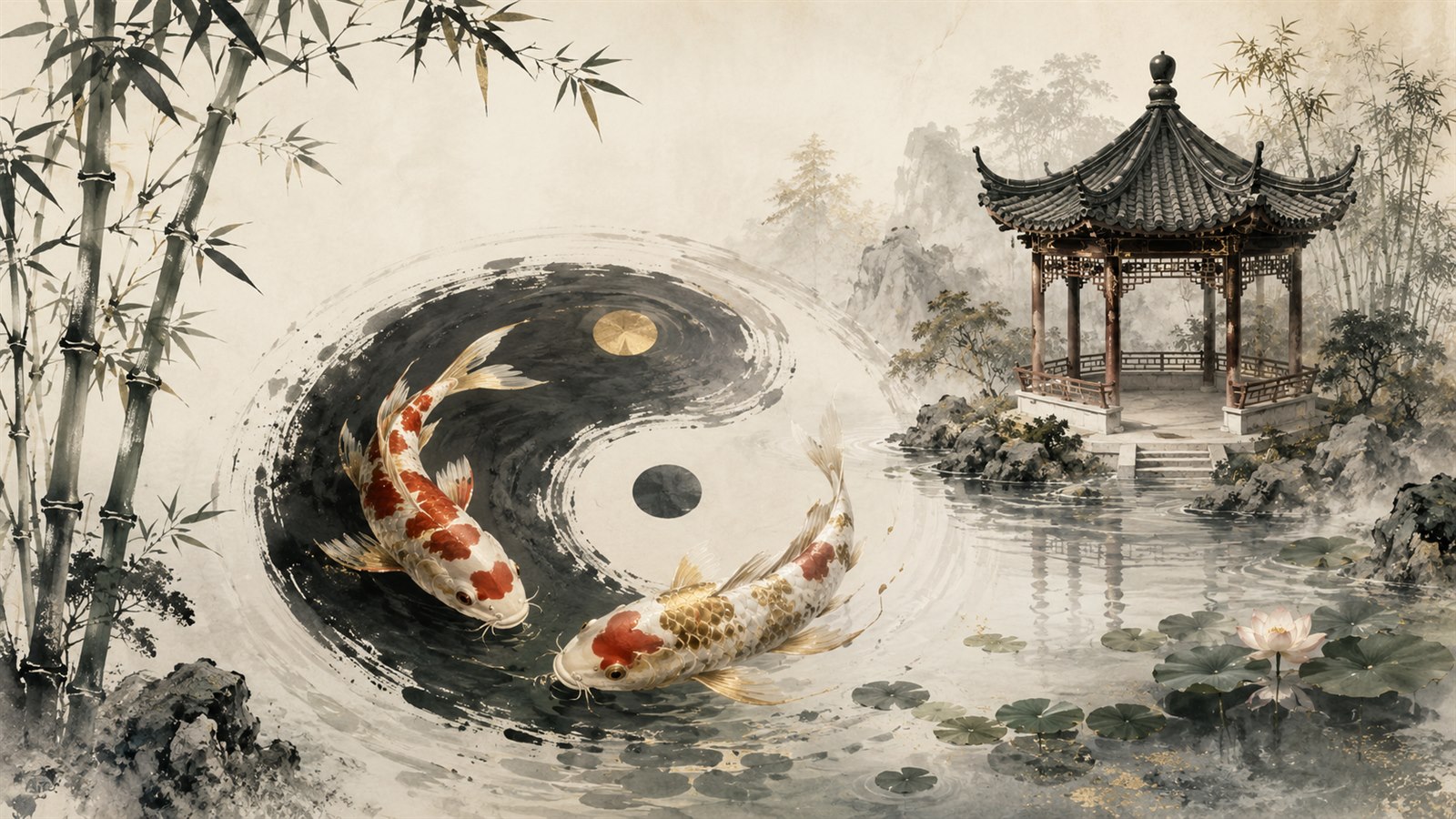
Before Nishikigoi: carp culture from China
Modern koi should not be described as appearing from nowhere in Japan. The deeper story starts with common carp, a hardy freshwater fish long kept in East Asia for food, pond culture, and symbolism. Chinese culture gave carp a powerful symbolic role: perseverance, abundance, transformation, and success are all connected to carp imagery, especially the familiar story of a carp passing the Dragon Gate.
Historical accounts commonly describe carp and carp-keeping knowledge moving from the Asian mainland into Japan over time. This does not mean that today's named Nishikigoi varieties were already complete in China. A careful distinction matters: the biological and cultural foundation is older and continental; the modern ornamental variety system was later developed through Japanese selection.
From food carp to color mutations in Niigata
The modern Nishikigoi story is usually traced to the mountainous area of Niigata Prefecture, especially the old villages around Yamakoshi and Ojiya. Farmers kept carp as food fish in irrigation ponds and flooded rice-field environments. In that setting, unusual color mutations appeared among otherwise dark food carp.
Instead of treating those colored fish as defects, farmers began keeping and pairing them. Over generations, red, white, black, blue-gray, yellow, metallic, and patterned fish were selected more deliberately. This is the key turning point: old carp culture became a specialized ornamental breeding tradition.
Why Niigata mattered
Niigata's snowy mountain villages created a special environment for carp keeping. Rice agriculture, irrigation ponds, winter storage, and farmer-to-farmer selection made it possible to notice and preserve unusual fish. The landscape was not a decorative garden at first; it was a working rural system. That practical background is part of why koi history is so interesting.
The word Nishikigoi means brocaded carp, and it reflects the shift from utilitarian carp to fish appreciated for color, pattern, skin, and presence. Japanese breeders gradually refined the eye for body conformation, shiroji, beni, sumi, metallic luster, scale structure, and overall balance.
Chinese courtyard and Japanese garden meanings
In China, carp imagery connects strongly with auspicious meaning. A koi or carp pond can feel at home in a Chinese courtyard because water, stone, bridges, plants, and fish all carry ideas of prosperity, movement, and life. The tai chi symbol is useful visually here because koi culture often plays with paired ideas: stillness and movement, black and white, water and garden, discipline and beauty.
In Japan, koi became closely associated with garden ponds, clear water, controlled views from above, and seasonal appreciation. Japanese garden design often frames koi as part of a larger scene: water surface, stones, moss, maples, bridges, and quiet movement. The fish are not just decoration; they animate the garden.
How koi became a world hobby
Koi spread internationally through breeders, exhibitions, specialist dealers, pond builders, magazines, books, clubs, and later online communities. In the United States and Europe, koi became linked with backyard ponds and water gardens. In China and other Asian markets, koi culture also overlaps with feng shui ideas, courtyard aesthetics, aquarium display, and collector interest.
Today the hobby has several layers: serious show competition, breeder bloodlines, backyard pond keeping, garden design, photography, online learning, and commerce. A beginner can enjoy a friendly pond fish, while an advanced collector may study body, skin, lineage, and future development for years.
Bloodlines, Breeders, and Regional Innovation
Koi history becomes much more useful when it moves beyond a single origin sentence. The real story is how generations of breeders kept a few promising parent fish, culled thousands of fry, tested mud ponds and indoor systems, and gradually fixed traits such as body frame, skin, beni, sumi, metallic luster, or scale structure.
Kohaku: from Gosuke to later named lines
Kohaku is the visual foundation of koi appreciation. A commonly repeated history traces one early modern line to 1888, when Kunizo Hiroi bred a red-headed female with a male whose markings resembled cherry blossoms. The fry became the basis of the now-lost Gosuke bloodline, from which later Kohaku lines such as Tomoin, Sensuke, Yagozen, and Manzo were developed.
This matters because it shows how koi bloodlines work: a named line begins with selected parent material, then survives only if later breeders keep selecting for body, shiroji, beni quality, pattern balance, and future development.
When sources name only a breeder, award, owner, or size, the exact parent pair should not be invented. Parent-fish claims need a source that actually names the parent fish or foundation female.
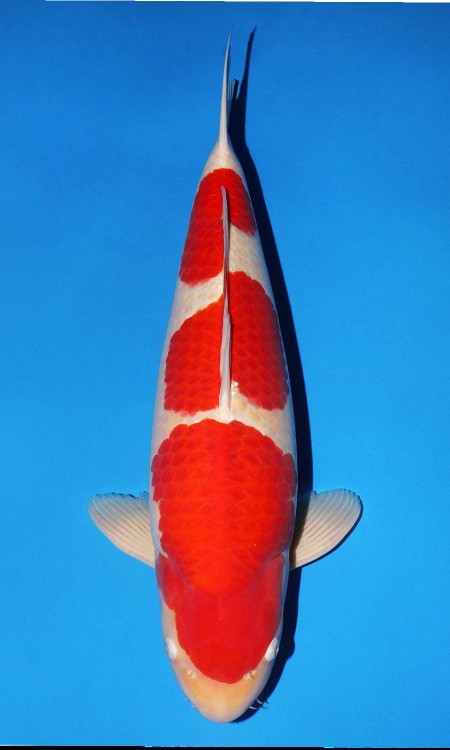
Bloodline movement: Matsue Sensuke, Donguri, Sakura, and Sakai Rose
One of the clearest lineage-transfer stories comes from a Sensuke Kohaku record. Koi.com notes that Matsue Nishikigoi Center preserved the Sensuke line and created two famous females, Donguri and Sakura; the same record says these females became the basis for the Rose bloodline of Sakai of Hiroshima.
That is more informative than simply saying a fish is expensive. It shows how a farm may import foundation female material, then express it through its own male fish, mud ponds, selection eye, and growing method.
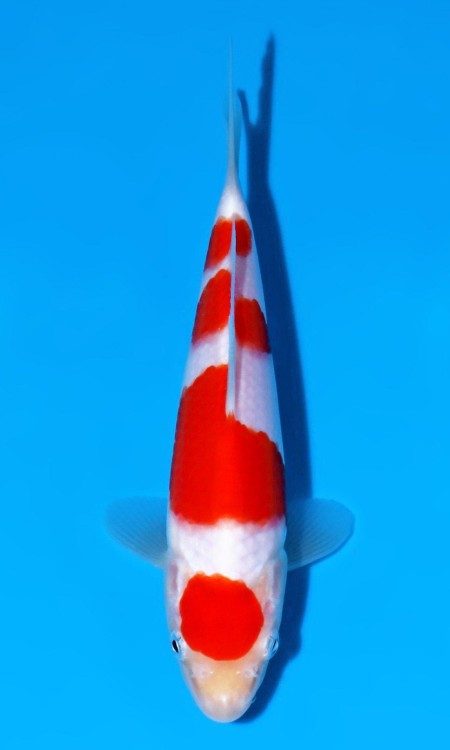
S-Legend: famous fish still need evidence boundaries
S-Legend is one of the best-known modern koi stories. Hikari's 48th All Japan Combined Nishikigoi Show report records it as a Sakai Fish Farm Kohaku, 97 cm and 6 years old when it won Grand Champion in 2017. Later reports describe it at 101 cm and sold at Sakai's 2018 auction for 203 million yen.
Some reports call it a Neo Universe-line Kohaku, but the public sources checked here do not provide a verifiable father-and-mother pairing. It is best used as a story about Sakai Kohaku, modern jumbo development, auctions, and show influence, not as an unsupported parent-pair claim.
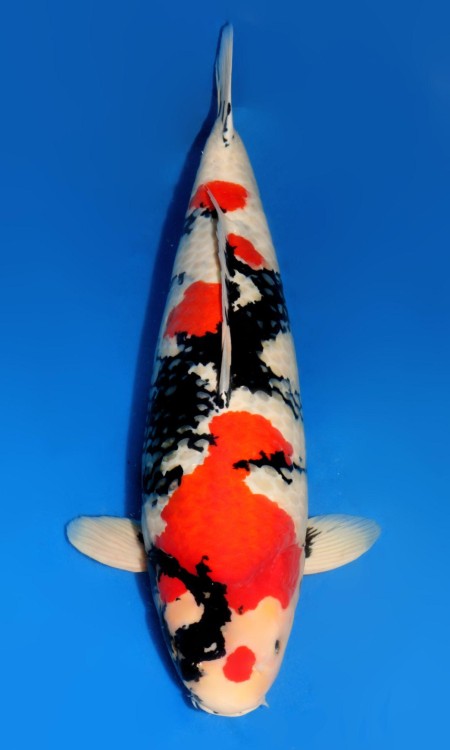
Gosanke depth: Taisho white ground, Showa sumi, and Dainichi identity
Taisho Sanke and Showa both use red, white, and black, but their histories point in different directions. Sanke is often read as Kohaku plus sumi on a clean white ground; Showa is built from a black identity where sumi can wrap from the side and enter the head. Modern Showa became cleaner and more powerful through long farm selection.
Dainichi is a useful example of farm identity. Its public history describes a farm founded in the 1950s in Ojiya, working around Kohaku, Taisho Sanke, and Showa while preserving bloodline, environment, food, and technique. The public story is less a single secret pairing than a continuous house style.
Tancho: national-symbol feeling and the difficulty of simplicity
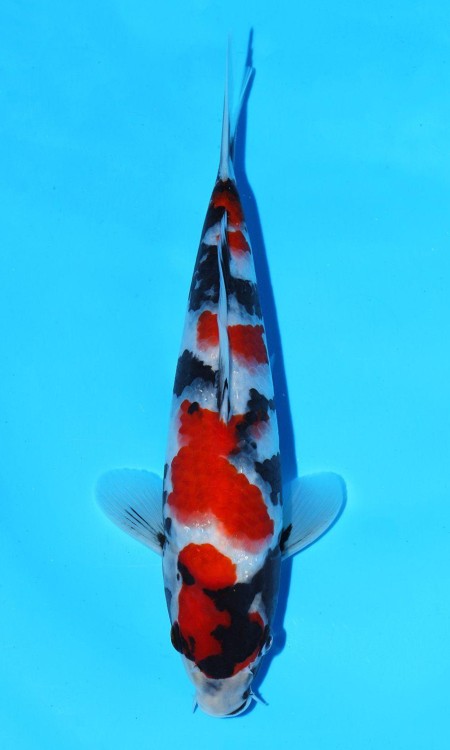
Tancho is a pattern category rather than one farm bloodline. JNPA describes it as a koi with one red, round head mark, named after the tancho crane. Tancho Kohaku is especially popular because the red circle on white recalls the Japanese flag, but Tancho can also appear in Sanke, Showa, and Goshiki.
The difficulty is that breeders cannot simply order a perfect Tancho. It may appear during ordinary variety breeding, but the mark must be centered and clean, and the underlying variety still needs body, skin, and quality.
Doitsu, Shusui, and non-Gosanke: side routes that expanded koi
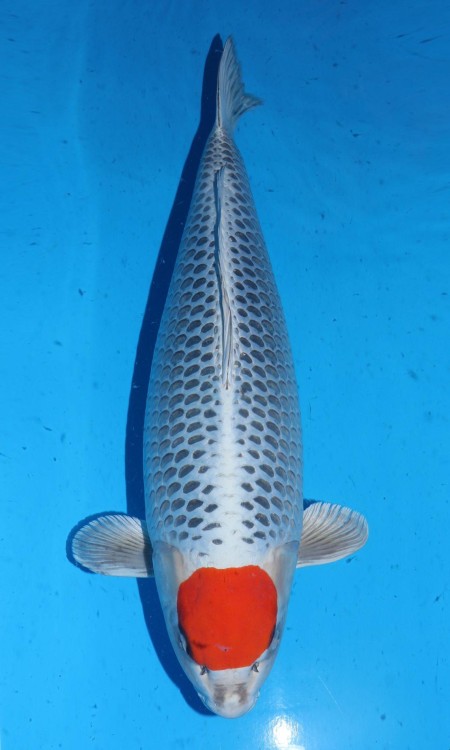
Doitsu koi show that koi history was never closed. European mirror and leather carp were originally selected as food carp; when reduced-scale genetics entered Japanese ornamental breeding, they created a new visual language. Shusui is commonly understood as the Doitsu form of Asagi, and later Doitsu Kohaku, Sanke, Showa, and metallic varieties followed.
Non-Gosanke varieties should not be treated as lesser fish. Chagoi, Soragoi, Ochiba, Karashigoi, Kumonryu, and other groups bring body size, personality, seasonal change, and pond presence into koi appreciation.
China and Thailand: inheritance plus local selection
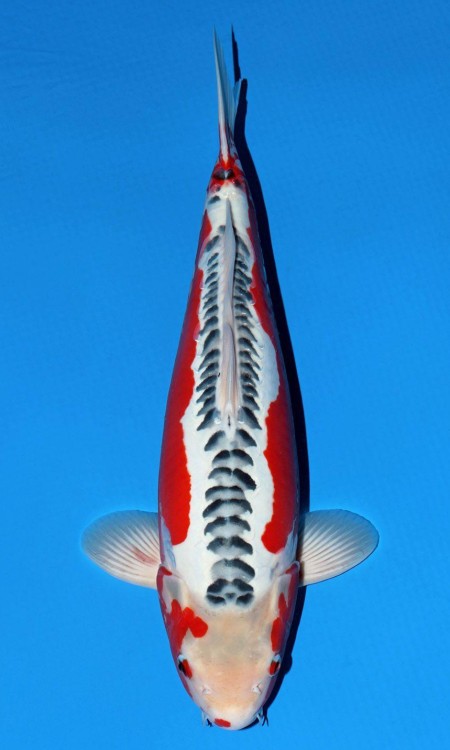
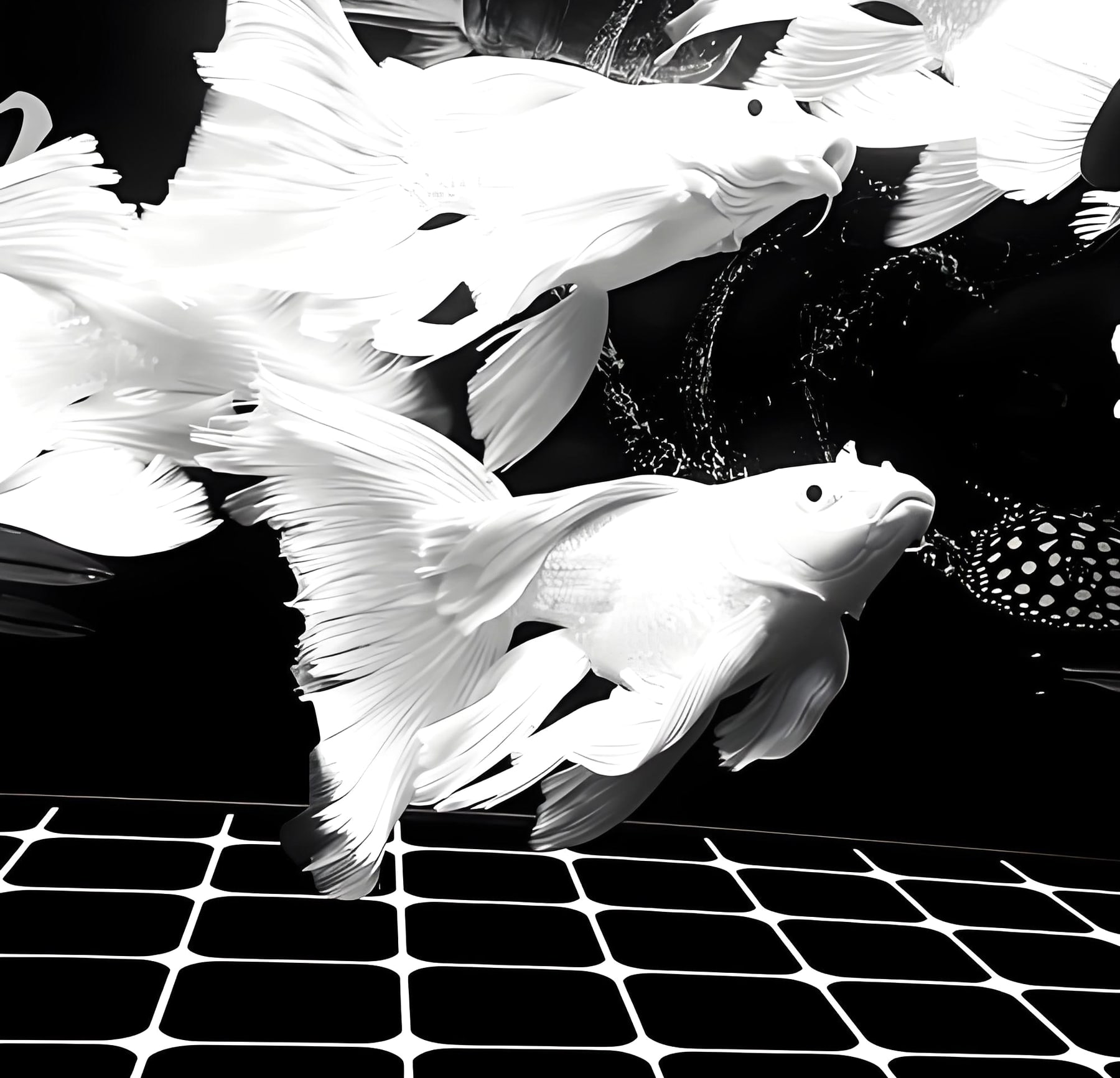
Modern Chinese koi culture should not be seen only as an import market. Public farm pages and reports show domestic farms selecting parent fish, growing koi locally, and presenting show results. Chinese hobby culture also gives more space to butterfly koi, aquarium display, and side-view appreciation.
Thailand represents another adaptation. Tropical water can support fast growth, but it also increases the need for oxygen, biosecurity, and year-round water management. These regional stories are best described as Japanese inheritance plus local selection.
Historical accuracy note
It is accurate to say that modern Nishikigoi were systematically developed in Japan, especially Niigata. It is also important to say that this development rested on a much older East Asian carp history, including Chinese carp culture and the movement of carp across the region. The best history page should hold both truths at the same time.
References
- All Japan Nishikigoi Promotion Association: Nishikigoi overview
- Ojiya City: Nishikigoi
- Yamakoshi information and regional culture
- Kyorin Hikari: Nishikigoi education pages
- Baidu Baike: 锦鲤
- Dainichi Koi Farm: farm history and Gosanke focus
- Sakai Fish Farm: history of Nishikigoi breeding
- Konishi Koi Farm: bloodline and farm profile
- JNPA: Tancho variety description
- Kodama Koi Farm: Ogon history
- Gary Koi: Chinese koi farm profile and show reports
- Dongfang Koi: Chinese koi farm profile
- Haishu Government: Guo Bin Koi Farm report
- Nishikigoi Alliance: international koi network including Thailand
- TNPA Thailand: Koi-Mart Farm Nishikigoi Center listing