
Award-winning reference photos
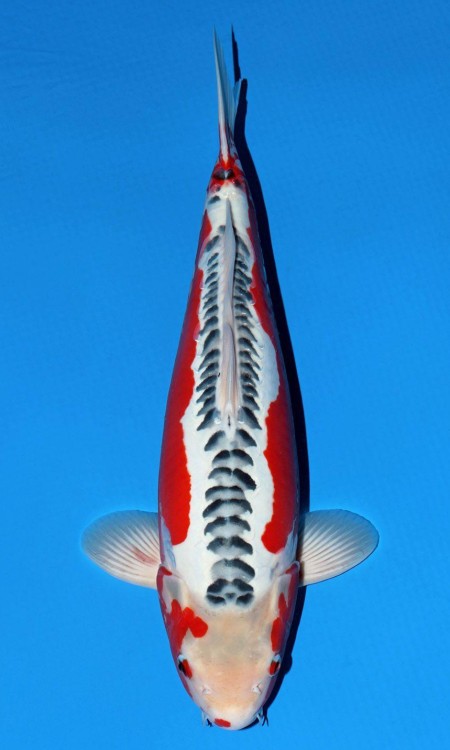
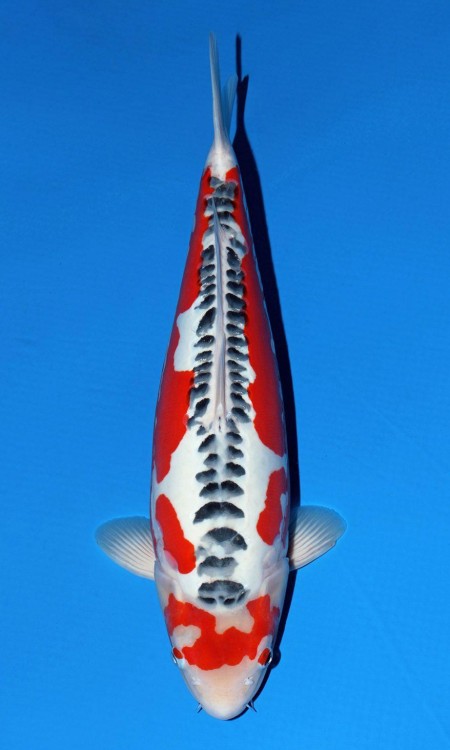
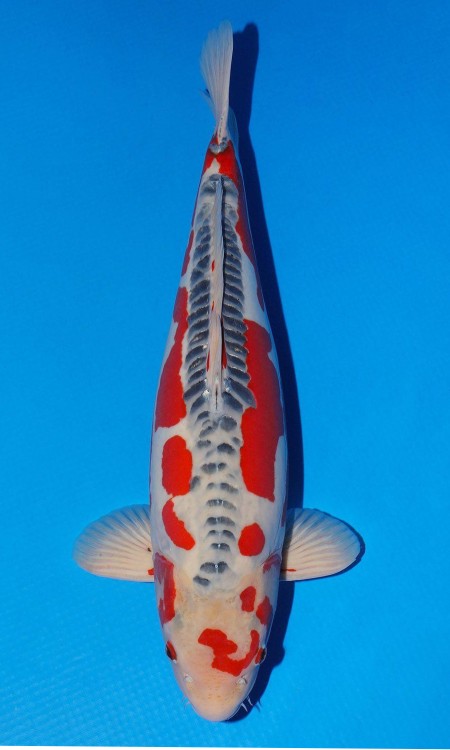
How to identify Doitsu
- Smooth skin with few regular scales.
- Mirror scales may run along the dorsal line or lateral line.
- Can appear as Doitsu Kohaku, Doitsu Sanke, Shusui, and many other forms.
Quality points
- Scale rows should be neat and intentional, not messy.
- Smooth skin makes scars, uneven color, and body faults easier to see.
- The fish still needs the correct pattern and quality for its base variety.
Base variety first, scale type second
Doitsu describes scale type rather than a color pattern. Official JAS examples include Doitsu Kohaku, Doitsu Taisho Sanke, Doitsu Showa, Doitsu Shiro Utsuri, Doitsu Goshiki, and Doitsu Ochiba Shigure. Identify the underlying variety first, then add the Doitsu scale modifier.
“Scaleless” is useful shorthand, but not a complete description: most of the body is exposed skin, while larger scales may remain along the back and sides.
Common comparison
Doitsu is a cross-cutting scale type, while Shusui is a named variety that combines Doitsu scale type with Asagi ancestry and characteristic color placement.
| Look first at | Good sign | Beginner caution |
|---|---|---|
| Body | Balanced frame, smooth swimming, no deformity. | Do not let rare color hide weak conformation. |
| Skin and color | Clean, readable, and consistent for the variety. | Muddy color usually becomes more distracting with size. |
| Scale or luster trait | Even rows, sparkle, reticulation, or metallic quality depending on the group. | Random patches, dull fins, or broken scale rows reduce impression. |
Sources and editorial note
This page follows the official JAS variety structure and distinguishes a base variety from cross-cutting scale traits. See the All Japan Nishikigoi Promotion Association Doitsugoi definition. Photos are limited to real images with source and license notes.