
Award-winning reference photos
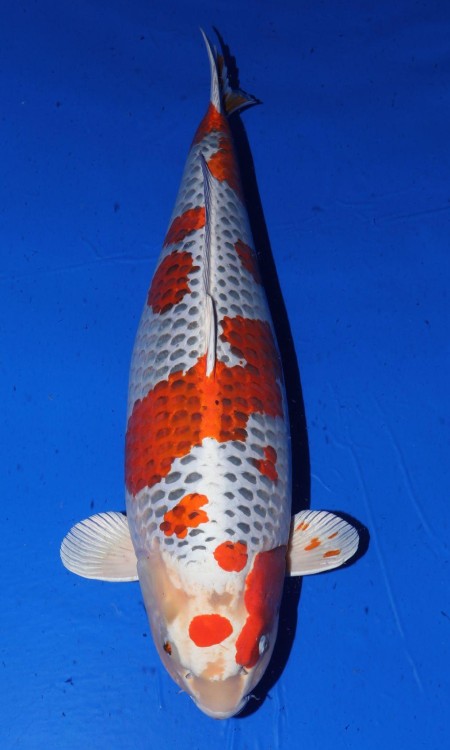
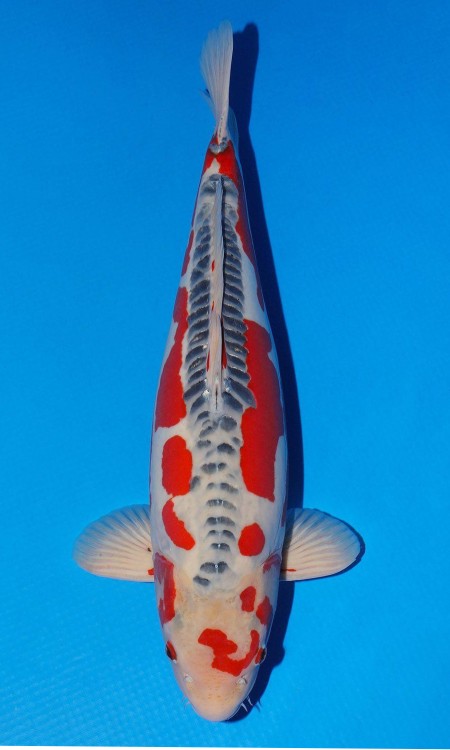
How to identify Goshiki
- Often shows Kohaku-like red over a darker netted base.
- The ground may range from light gray to deep charcoal depending on bloodline and development.
- The impression should be layered, not simply dirty.
Quality points
- Red should remain bright and readable against the dark ground.
- Reticulation should look intentional and even.
- Avoid examples where all colors blur into a muddy surface.
Common comparison
Look for Asagi-ji: a blue or indigo, mesh-like ground formed by the scale arrangement across the back. Counting five visible colors is not a reliable identification test.
In Koromo, the blue or black edging is associated with the red-pattern scales; the white ground does not have Asagi-ji. Kujaku combines an Asagi-like mesh and red pattern with whole-body metallic luster. Compare the location of the mesh first, then check the luster.
Definition: All Japan Nishikigoi Promotion Association — JAS Goshiki.
| Look first at | Good sign | Beginner caution |
|---|---|---|
| Body | Balanced frame, smooth swimming, no deformity. | Do not let rare color hide weak conformation. |
| Skin and color | Clean, readable, and consistent for the variety. | Muddy color usually becomes more distracting with size. |
| Scale or luster trait | Even rows, sparkle, reticulation, or metallic quality depending on the group. | Random patches, dull fins, or broken scale rows reduce impression. |
Sources and editorial note
This page follows the variety structure used by Japanese koi references and the book notes in the My Koi Garden research library, especially the distinction between true variety groups and cross-cutting traits such as Doitsu and Gin Rin. Photos are limited to real images with source and license notes.