
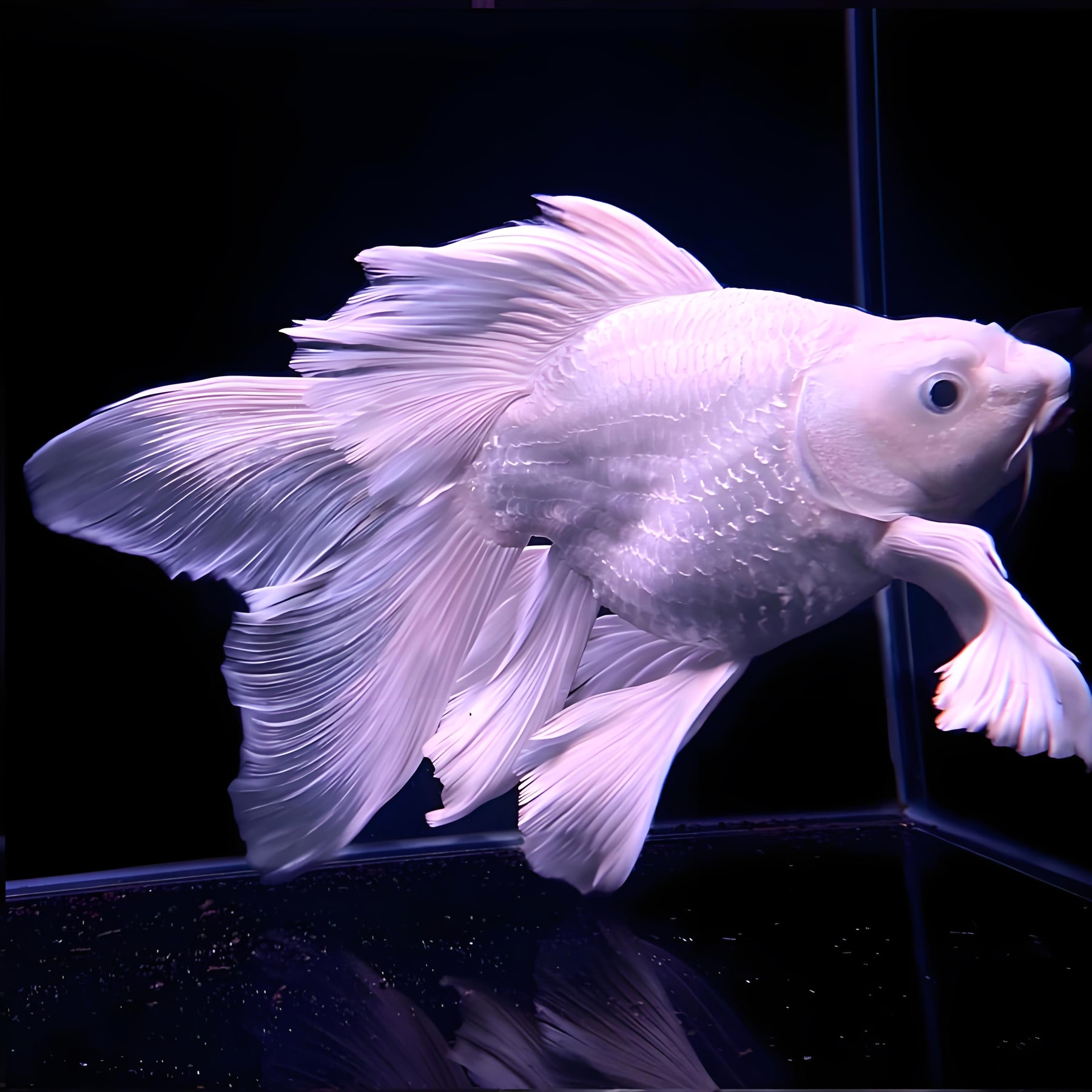
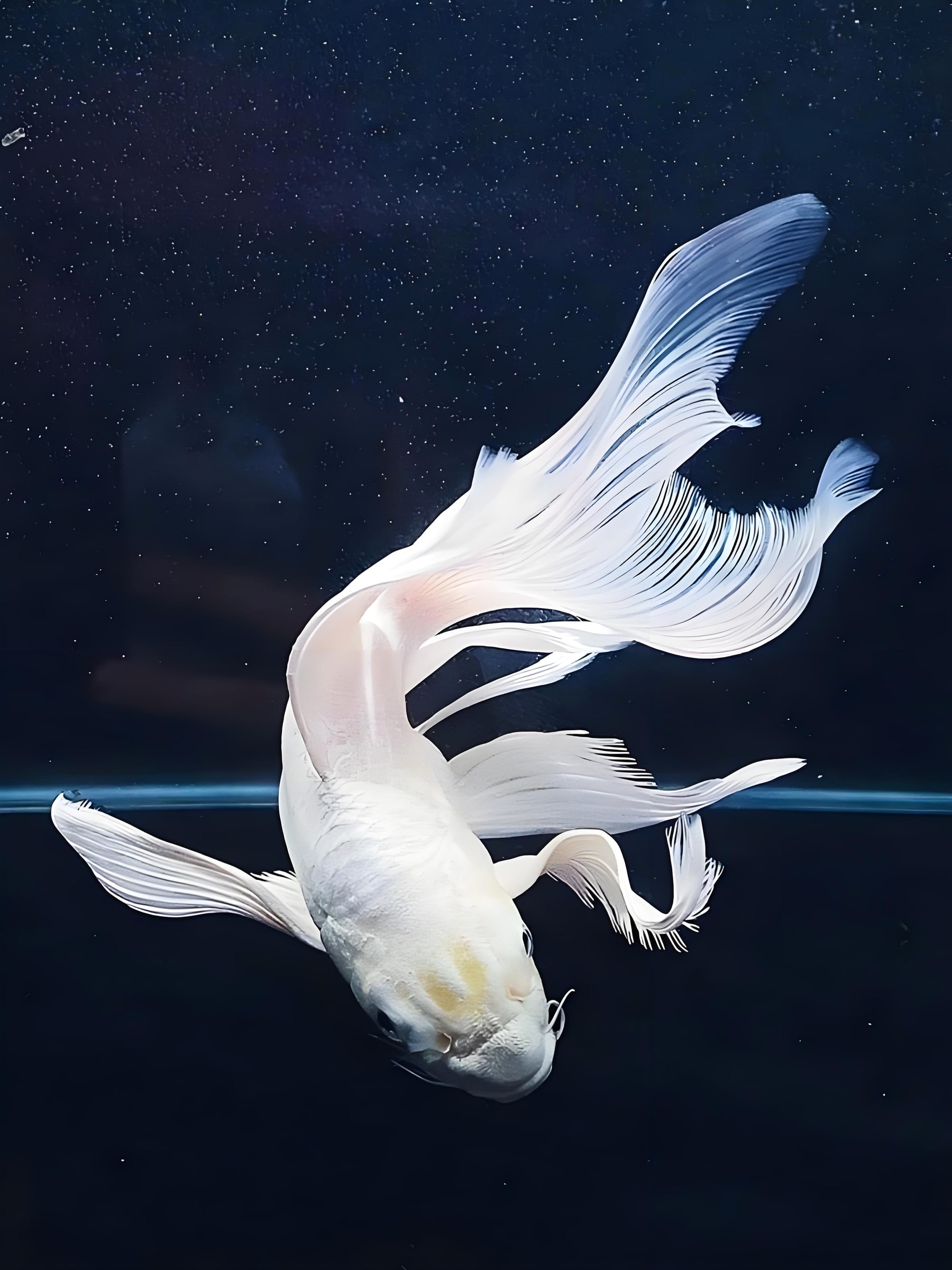
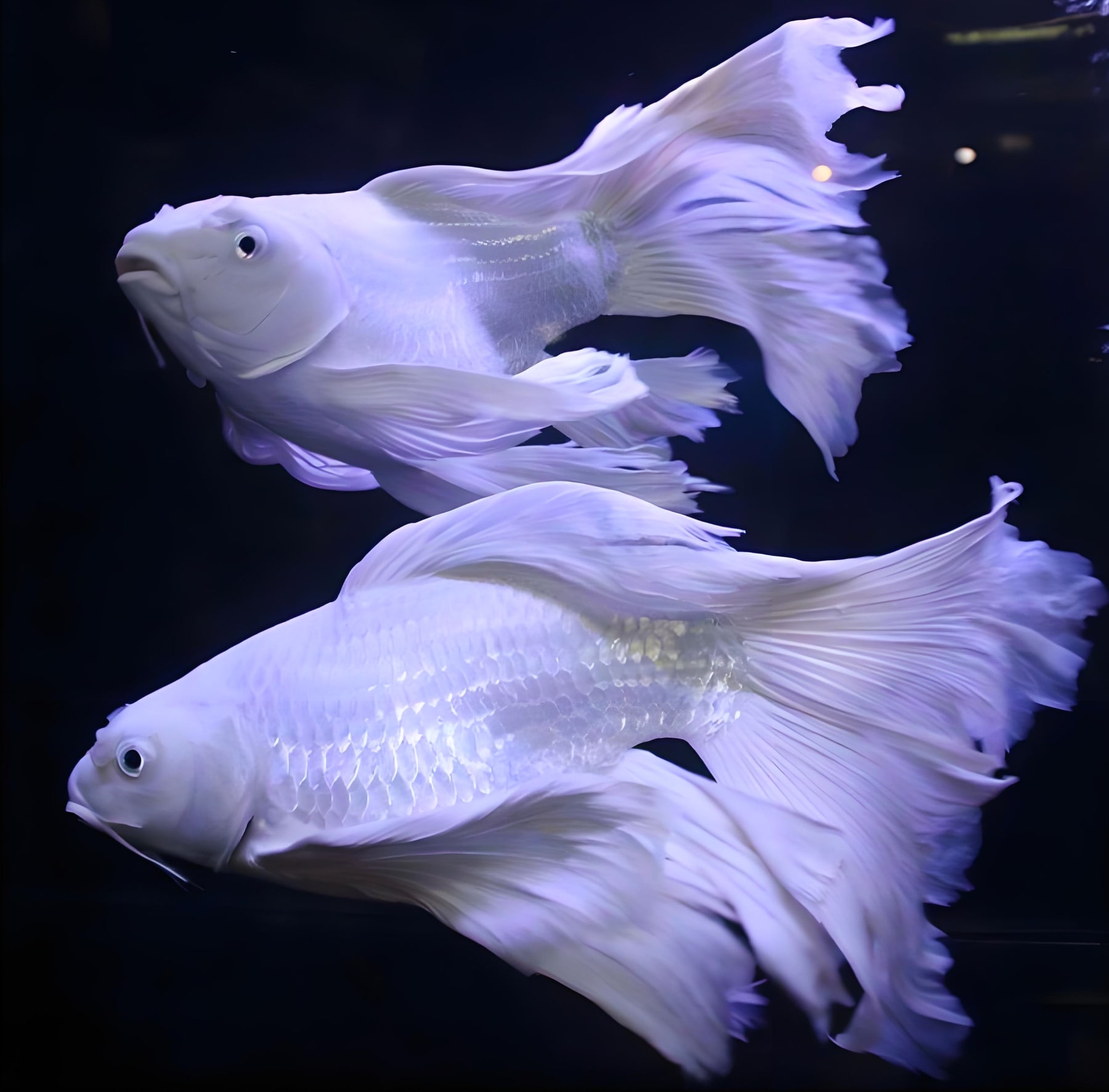
Chinese white butterfly koi gallery
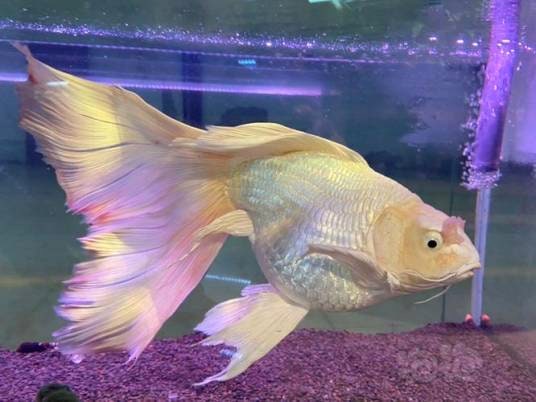
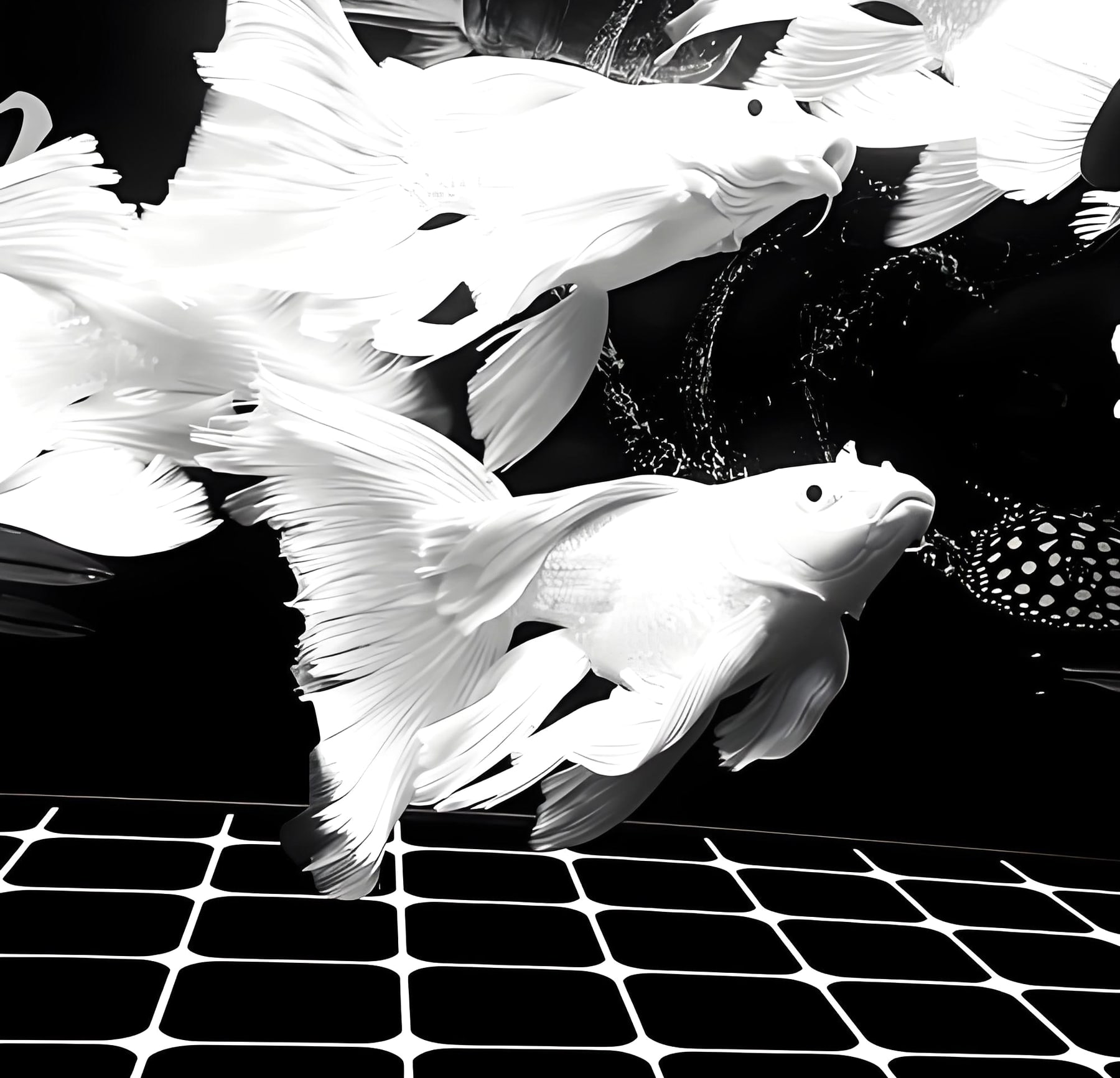
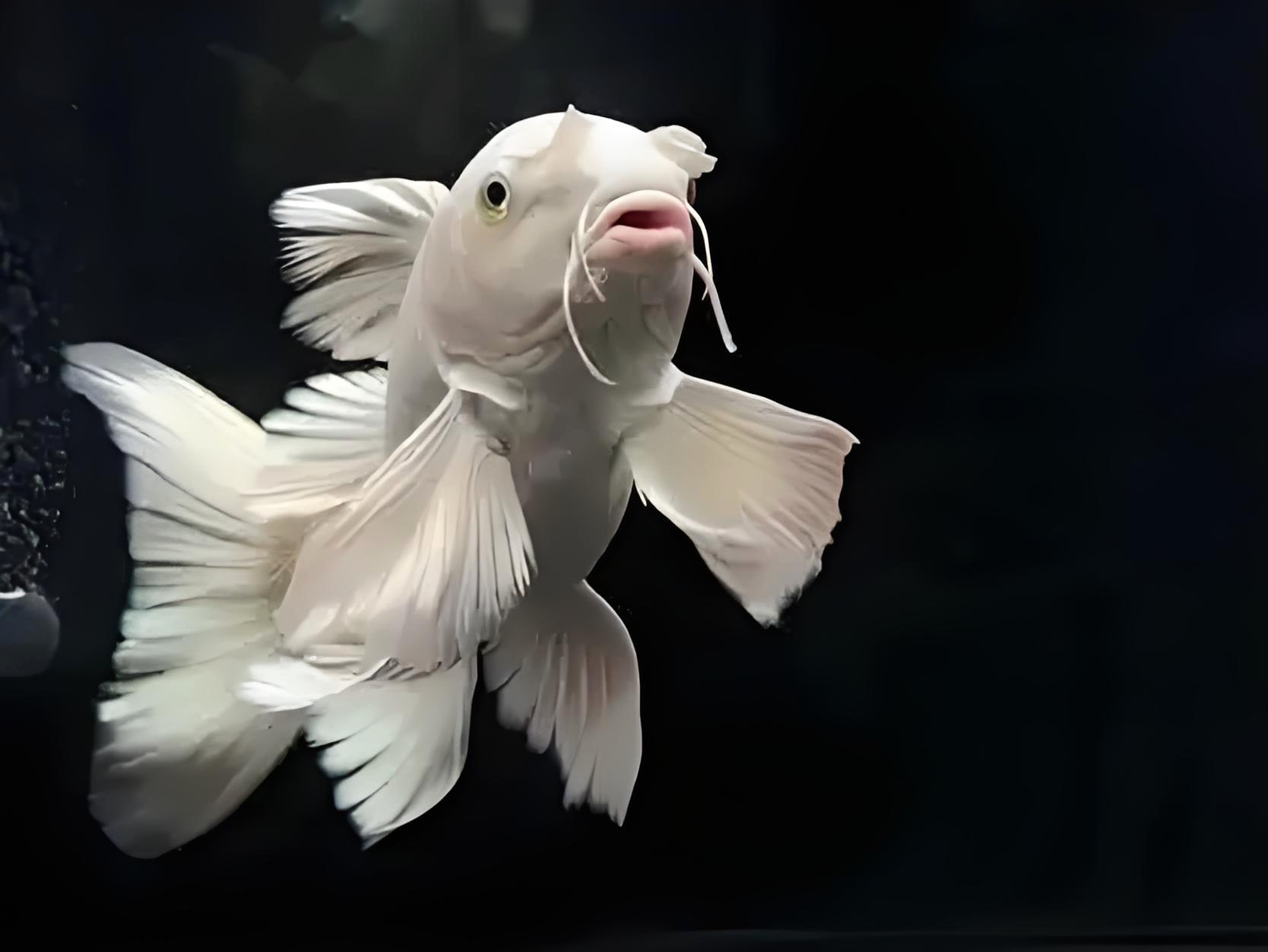
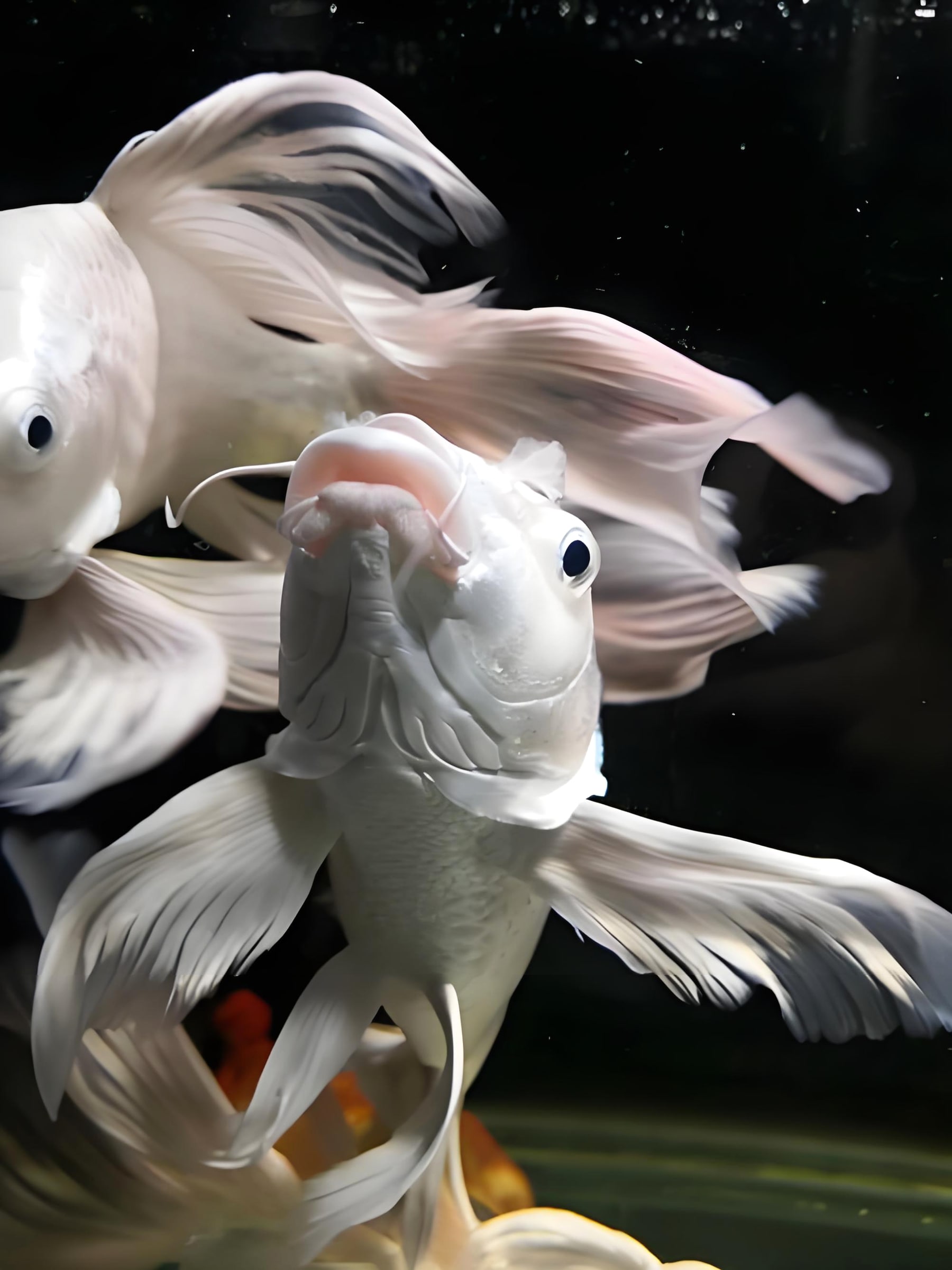
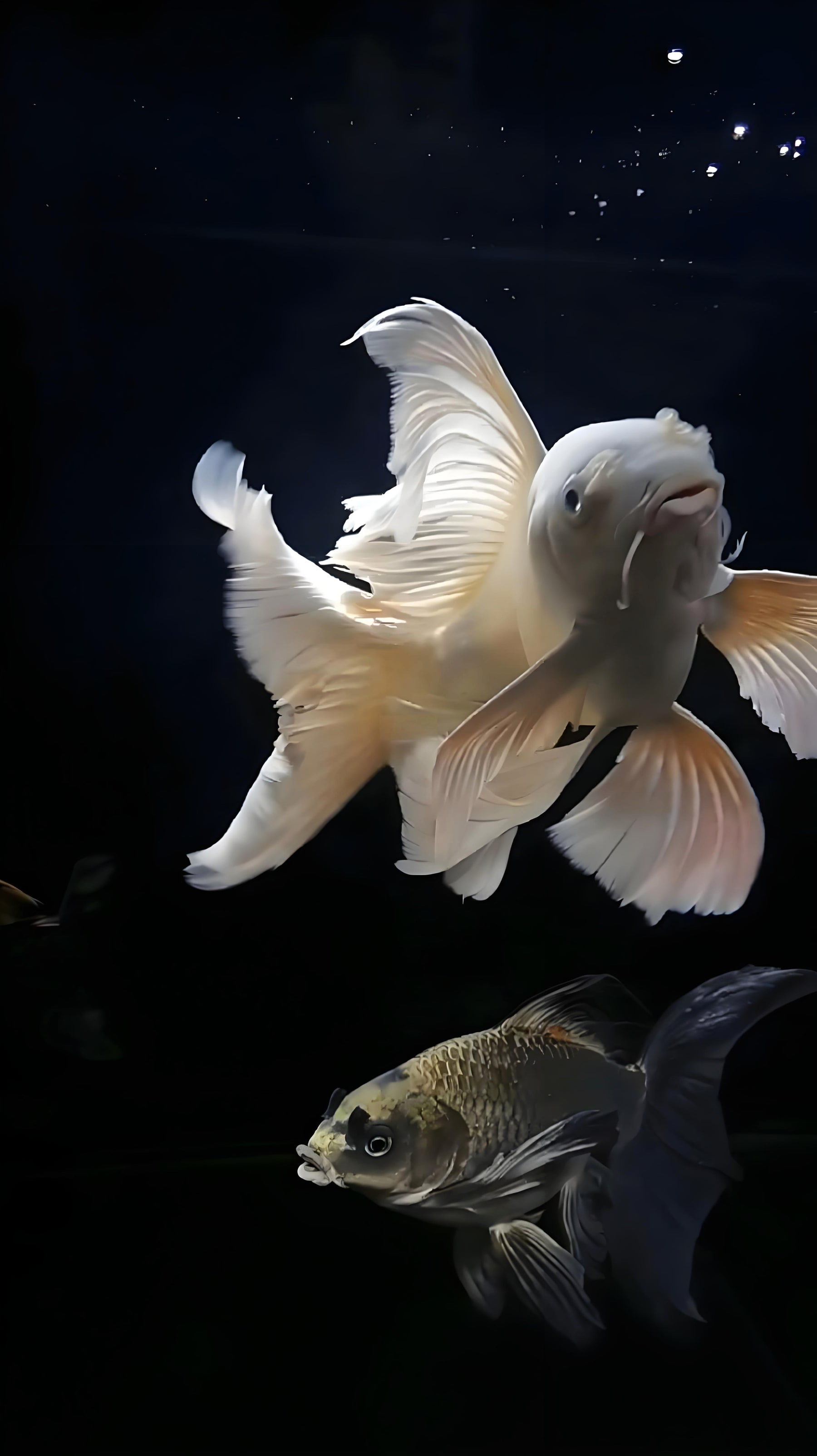
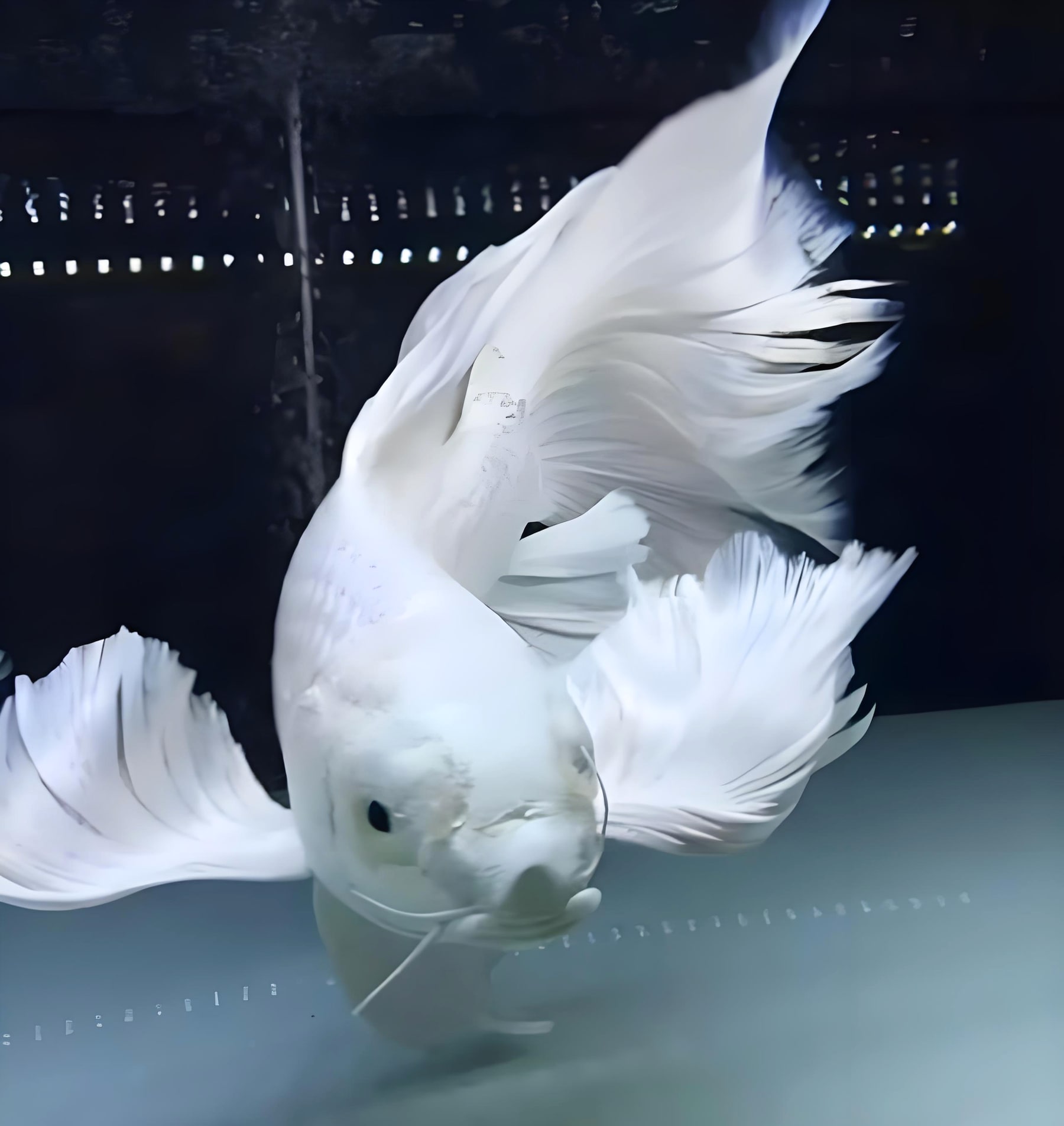
These real Chinese reference photos show the long, flowing fins and side-view appeal that make white butterfly koi popular in aquarium displays. Click any photo to open the larger image.
What makes butterfly koi different
Butterfly koi are longfin koi: the body is koi-like, but the pectoral, dorsal, tail, and ventral fins extend longer and flow more dramatically. In strict Japanese show contexts they are not treated the same as traditional shortfin Nishikigoi, but they are highly popular with aquarium and ornamental pond keepers.
Why they are common in Chinese aquarium keeping
Chinese hobbyist articles often discuss butterfly koi as tank display fish because side-view aquariums show the flowing fins well. That changes the care priorities: the tank must provide swimming length, powerful filtration, protected intakes, and stable water rather than simply looking decorative.
Tank size and layout
- Use the largest practical tank. A tank under 1 meter long is usually a poor long-term choice for adult butterfly koi because swimming room and water stability are limited. For long-term adult care, many keepers should think in pond or very large tank volumes, not small decorative aquariums.
- Prioritize length and width over tall narrow tanks. Long fins need turning room.
- Avoid sharp rocks, narrow decorations, rough plastic plants, and exposed pump intakes that can tear fins.
- Use a lid or safe cover; large carp-type fish can jump when startled or stressed.
Filtration for tank-raised butterfly koi
Butterfly koi produce a heavy waste load. A light decorative filter is not enough. Use strong mechanical and biological filtration, such as a sump/bottom filter, large canister filter, overhead trickle filter, or combined system. The goal is stable ammonia and nitrite at zero, with manageable nitrate through water changes.
Water quality and water changes
Tank-raised butterfly koi need the same zero-ammonia, zero-nitrite discipline as pond koi, but mistakes show faster because the water volume is smaller.
| Tank parameter | Target | Notes for butterfly koi |
|---|---|---|
| Ammonia / nitrite | 0 ppm | Do not rely on clear water. Longfin koi can look elegant while the filter is failing. |
| Nitrate | Preferably below 40-80 ppm | Use regular partial water changes and avoid overfeeding. |
| pH | Stable, commonly 7.0-8.5 | Chinese aquarium guides often emphasize stable aged water; test KH so pH does not crash. |
| Temperature | Stable moderate water, often low-to-mid 20s C for indoor display | Avoid sudden winter water-change drops and summer overheating. |
| Oxygen | Strong aeration, especially after feeding | Canister filters alone may move water without adding enough gas exchange. |
- Do not add untreated tap water directly. Use dechlorinator or properly prepared water.
- Match new water temperature closely to tank water to avoid stress, especially in winter.
- Change water regularly, but avoid large careless swings. Many hobbyist guides suggest partial changes around 20-30% when parameters and temperature can be controlled.
- Test ammonia, nitrite, nitrate, and pH instead of relying only on water clarity.
Temperature and oxygen
Chinese sources commonly recommend stable moderate temperatures, often around the low-to-mid 20s Celsius for aquarium butterfly koi. Stability matters more than chasing a single perfect number. Add aeration, especially in warm water, after feeding, or when medication is used.
Feeding
Overfeeding is one of the fastest ways to damage water quality. Feed small amounts that are eaten quickly. In a tank, leftover food has nowhere to disappear; it becomes ammonia pressure on the filter.
Compatibility
Keep butterfly koi with fish that tolerate similar water temperature, size, and waste conditions. Avoid fin nippers and small fish that may be bullied or eaten. In planted tanks, expect butterfly koi to disturb or eat soft plants.
Common tank mistakes
- Using a beautiful but undersized tank.
- Relying on weak filtration because the water looks clear.
- Letting pump inlets or decorations damage long fins.
- Changing water with a large temperature difference.
- Feeding for appearance rather than for water quality.