
Award-winning reference photos
Identity
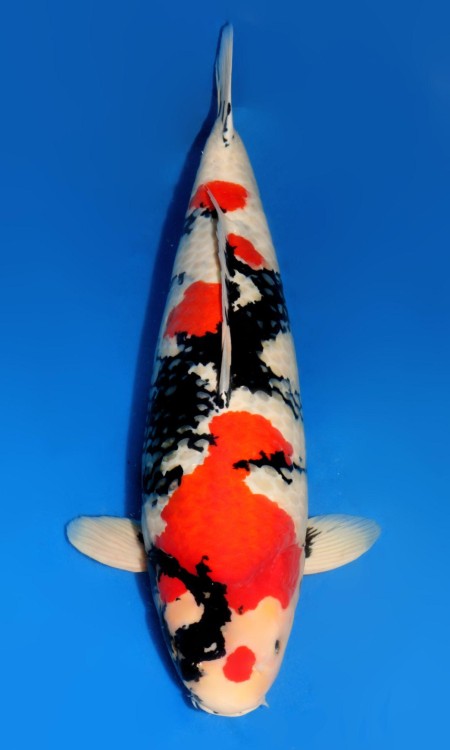
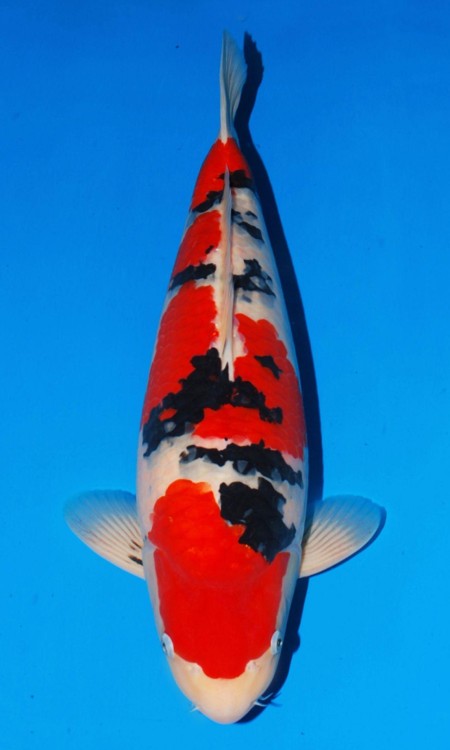
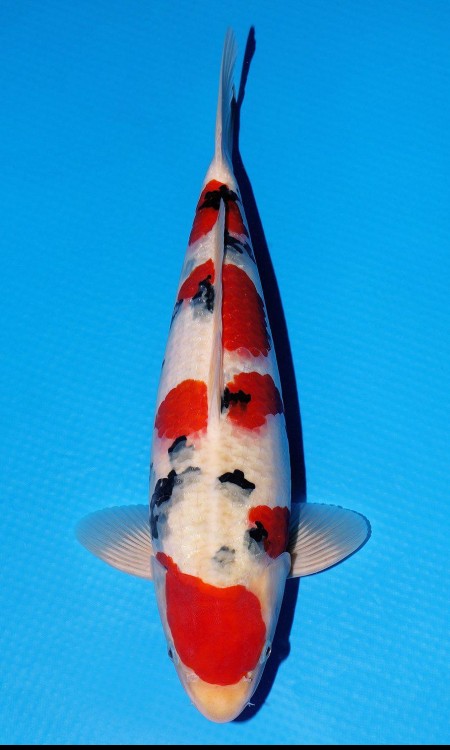
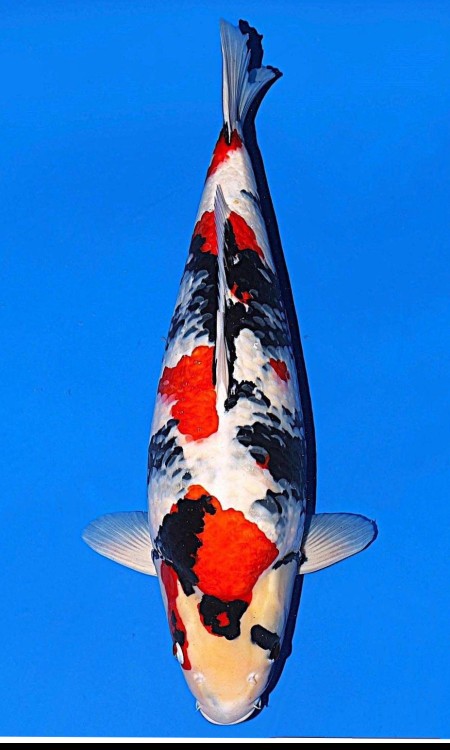
Taisho Sanke, also called Sanke, builds on the red-and-white foundation of Kohaku by adding black sumi. A useful beginner rule is that the white base should still feel dominant, with sumi acting as accent rather than heavy background.
| Feature | Sanke expectation | Compare with Showa |
|---|---|---|
| Base impression | White-based koi with red pattern and black accents. | Showa often feels black-structured, with sumi wrapping through the body. |
| Head | Usually clean of heavy sumi; red on the head should be balanced. | Showa can have important black on the head. |
| Sumi | Placed as supporting accents, often above the lateral line. | Showa sumi may wrap from below and create a bolder frame. |
| Priority | Judge body and Kohaku-like red/white quality before getting excited by black spots. | Showa balance depends more on three-color structure. |
Sanke or Showa: read the sumi structure
| Check | Taisho Sanke | Showa Sanshoku |
|---|---|---|
| Base-color logic | White base with red pattern and separate black markings. | Black base with red and white pattern. |
| Sumi topology | Balanced, glossy urushi-zumi appears as supporting, more isolated markings. | Continuous utsuri-zumi can wrap upward from the belly and structure the whole pattern. |
| Head and fins | A clean head is a useful clue, but head sumi alone is not a strict classifier. | Head sumi, menware, and motoguro are common clues, but no single one proves the variety. |
| Useful comparison | Remove the red and the visual logic approaches Shiro Bekko. | Remove the red and the visual logic approaches Shiro Utsuri. |
Definition source: All Japan Nishikigoi Promotion Association — Taisho Sanke and Showa Sanshoku.
Core terms
- Sumi
- Black marking. In Sanke it is usually read as smaller, refined accents on a white-based fish.
- Tejima
- Black striping in the pectoral fins. It can appear in Sanke and is different from the heavier Showa impression.
- Gosanke
- The three highly regarded classic varieties: Kohaku, Taisho Sanke, and Showa Sanshoku.
Beginner notes
- Look for a clean white base and balanced red pattern before judging the black.
- Black markings should support the overall impression, not make the koi look crowded.
- Sanke usually does not have heavy black on the head like Showa can.
- If you are unsure whether a koi is Sanke or Showa, look at whether the fish feels white-based or black-structured.